From Manfredonia to Bari by bike: 140 km between coast and city
Salt flats, ports, and seaside villages accompany a journey through Puglia filled with stops, landscapes, and places to experience beyond cycling.
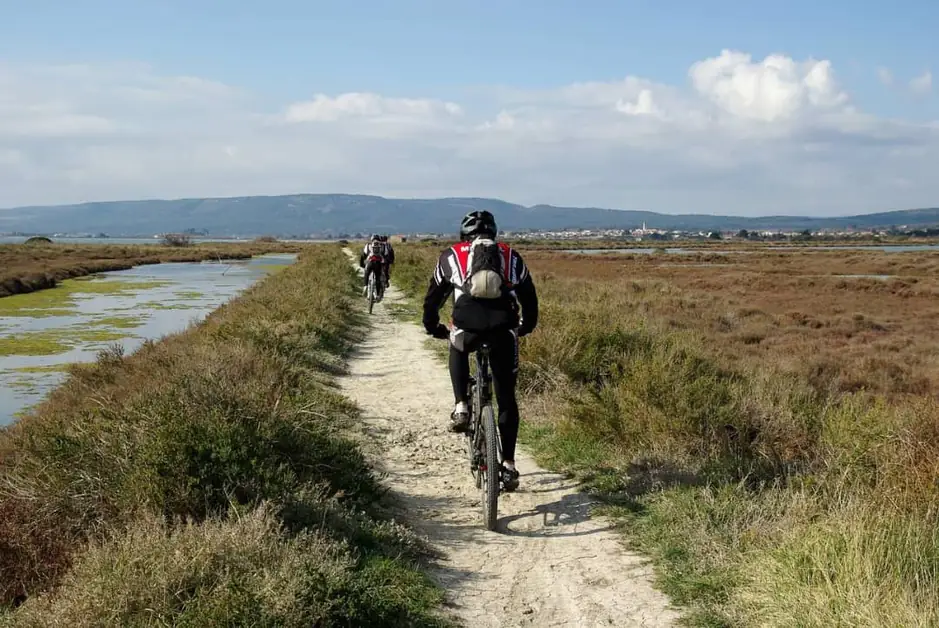
The Ciclovia Adriatica from Manfredonia to Bari stretches 140 kilometers along the coast and inland of Puglia. It passes through some of Puglia's most varied landscapes: from the saline of Margherita di Savoia to coastal cities like Zapponeta, Barletta, Trani, Bisceglie, Molfetta, and Giovinazzo, ending in Bari.
Average cycling time: about 6 hours and 20 minutes. Elevation gain: modest, around 400 meters. Best time: May to June. Overall difficulty: low, as it's flat.
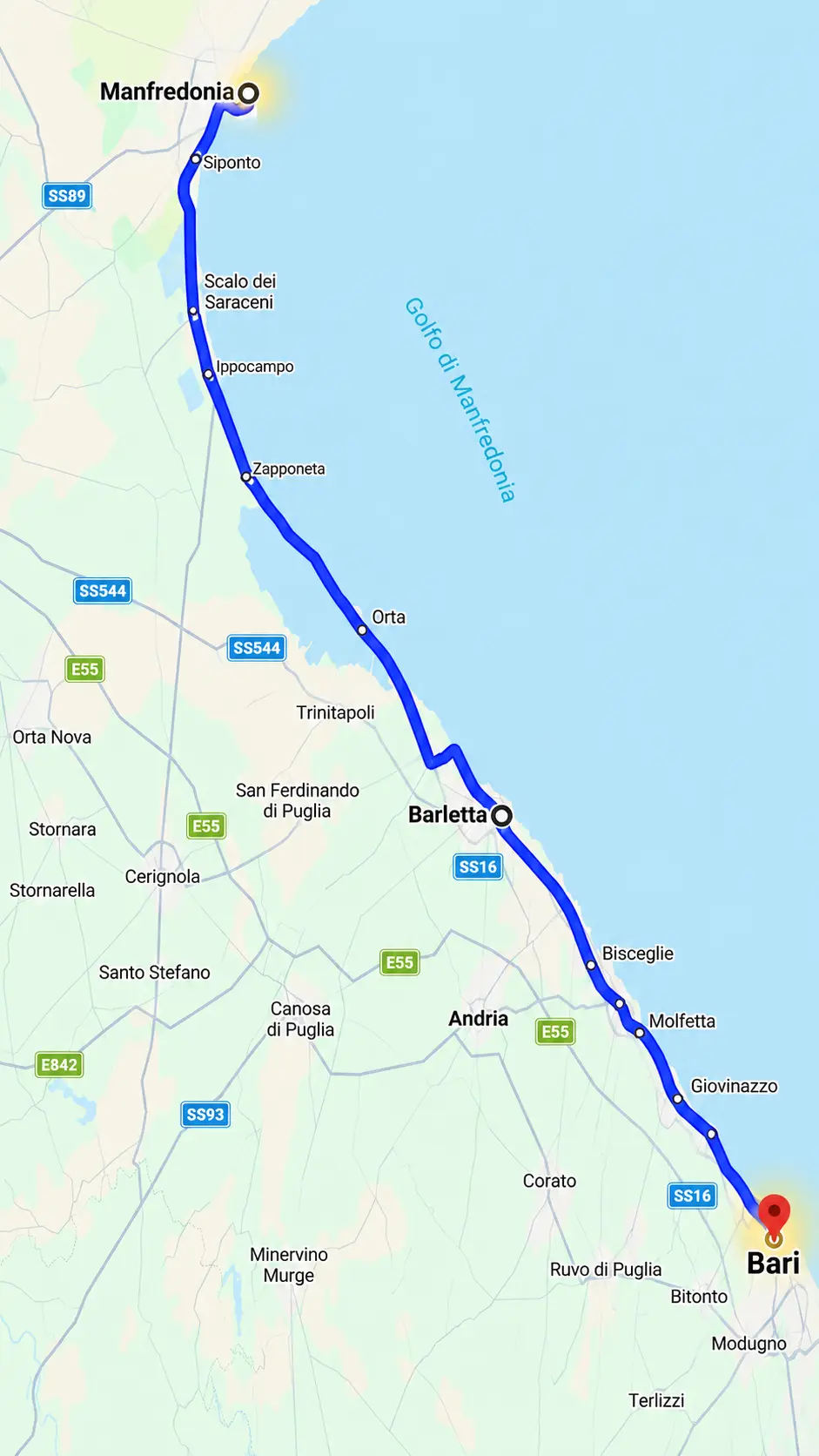
From Manfredonia to Bari through salt pans, cities, and sea
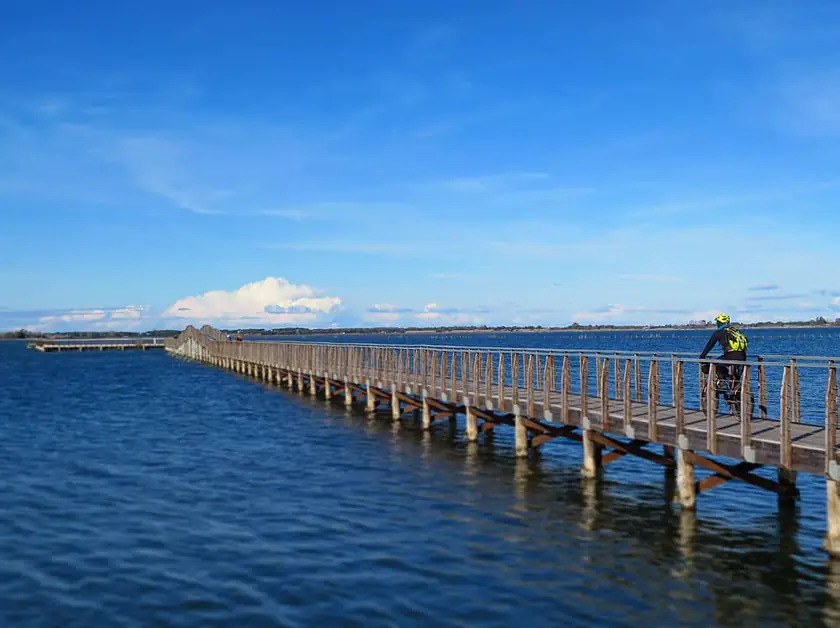
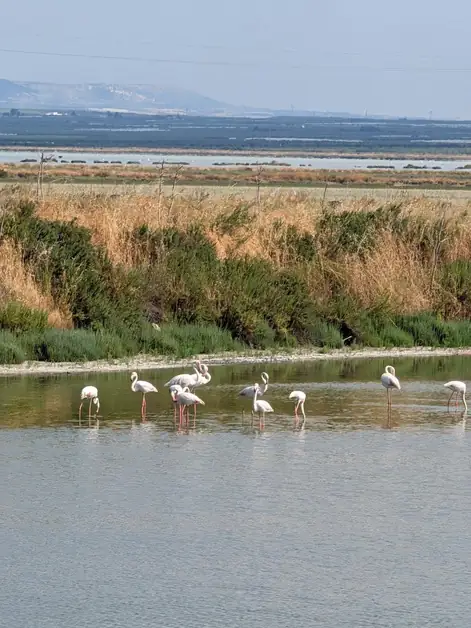
Starting in Manfredonia, where the previous stage from Lesina ends, you cycle south to Margherita di Savoia, where the salt pans are some of the most enchanting spots on the route.
Continuing, you enter the province of Barletta-Andria-Trani. Barletta and Trani aren't just pass-through points. They can be significant stops to explore the historic centers, ports, and cultural heritage of these cities. In Trani, you find the Cathedral of San Nicola Pellegrino, directly overlooking the sea.
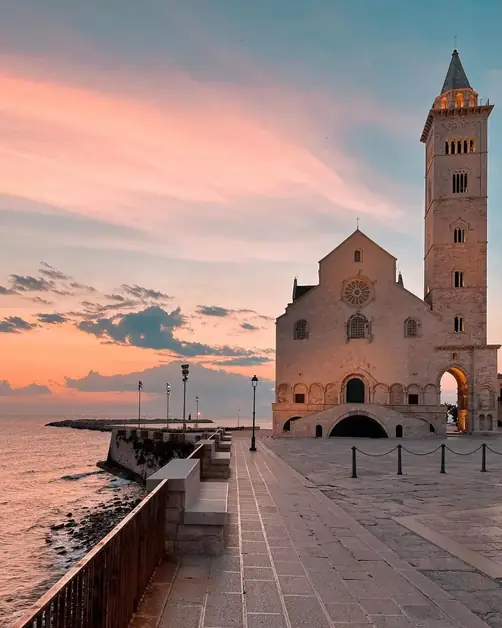
The route then continues to Bisceglie, Molfetta, and Giovinazzo. Here, the connection with the sea grows stronger, passing through towns that are closely spaced.
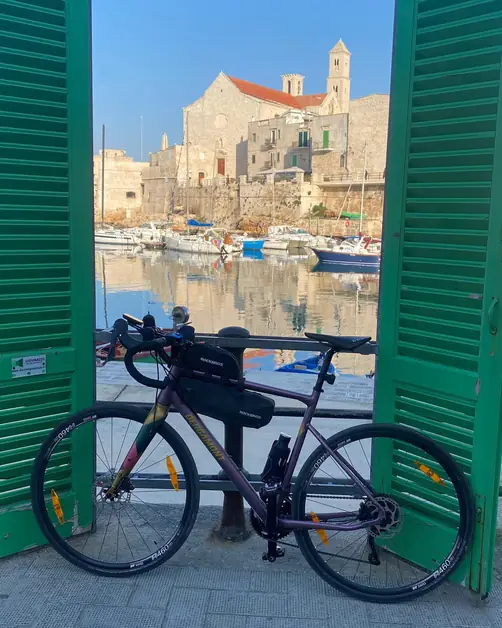
Personally, I found the Giovinazzo area particularly charming. I stayed at a B&B overlooking the harbor. The promenade is pedestrian-friendly and lively. I parked my bike near a café and enjoyed the Panino della Nonna. It's a sandwich filled with traditional Puglian dishes, and there's even a famous summer festival dedicated to it.
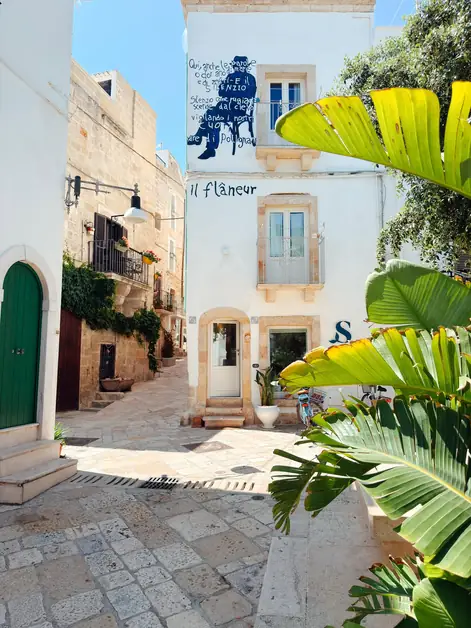
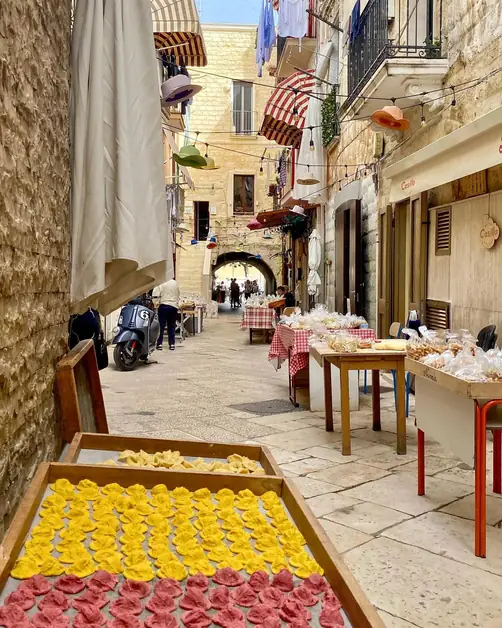
For me, that's the point of the itinerary: not to rack up kilometers, but to use the bike to reach a place and then fully experience it. The journey ends in Bari, entering Bari Vecchia up to Strada Arco Basso. This is the famous street of orecchiette, where women make fresh pasta right outside their homes.
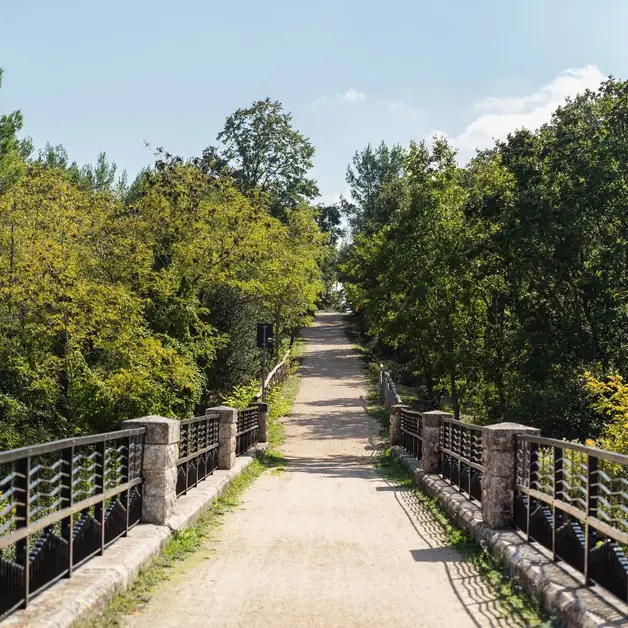
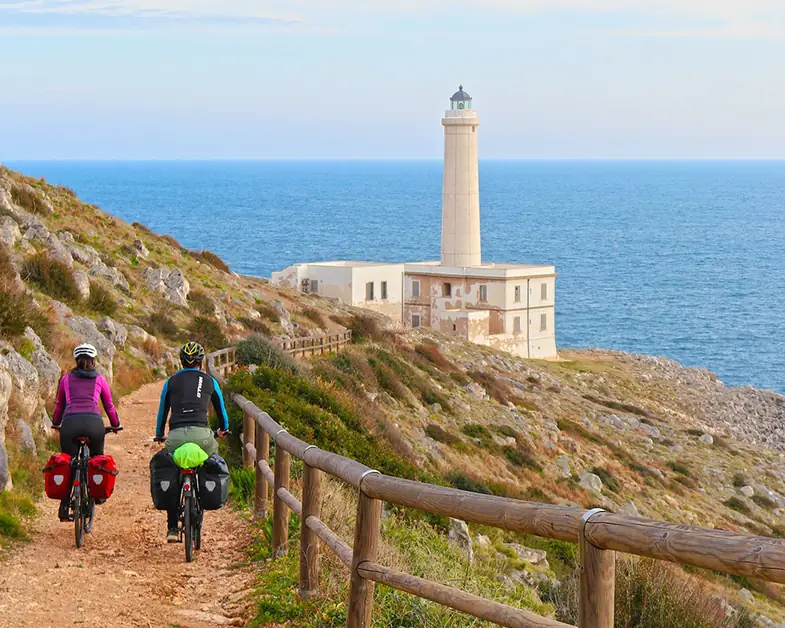
The Ciclovia has some issues: it's not a single, traffic-separated bike path for the entire route. The path alternates between bike lanes, secondary roads, and service roads. Because of this variety, I'd choose a trekking bike, a gravel bike, or an e-bike, especially for a trip with luggage. Before starting, it's good to know in advance where you'll return to regular roads. A critical point is the stretch between Margherita di Savoia and Barletta, near the Ofanto. For about a kilometer, there's currently no alternative to the main road. Vehicles move fast here, so I preferred to stay close to the right edge of the road, guided by the road markings.
Another section that requires caution is between Bisceglie and Molfetta, especially when approaching the latter.
From Molfetta onwards, the route becomes easier. Thanks to urban bike paths, coastal secondary roads, and service roads, you can reach Giovinazzo and then Bari without difficulty.
The potential of the Ciclovia remains high, especially due to the proximity of coastal cities. When you arrive in these areas in the late afternoon, the fatigue from cycling quickly fades away. You leave the bike near the harbor and stroll among the crowded waterfront spots.