Explore the magical Ariscianne-Boccadoro wetland
Discover the beauty of the Ariscianne-Boccadoro wetland for an unforgettable trekking experience.
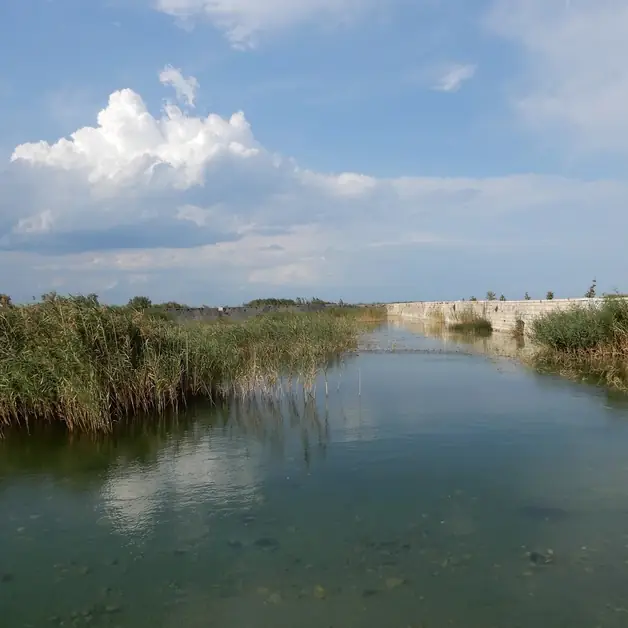
The Vasca di Boccadoro is a water basin on the coast north of Trani, near Barletta. It was built in 1820 as part of a larger water supply project for the city. Back then, many places in the South sought local solutions before big aqueducts. The idea was to collect and use spring water. But it didn't work. The water was too salty, so the system was soon abandoned.
Since then, something more interesting happened than the original plan. Without major interventions, the area naturally became a wetland. Today, the basin is part of a larger system called the Ariscianne-Boccadoro area. It acts as an ecological corridor between Trani and Barletta. It's not a "built" park, but a transition zone between the sea, reeds, and wild vegetation.
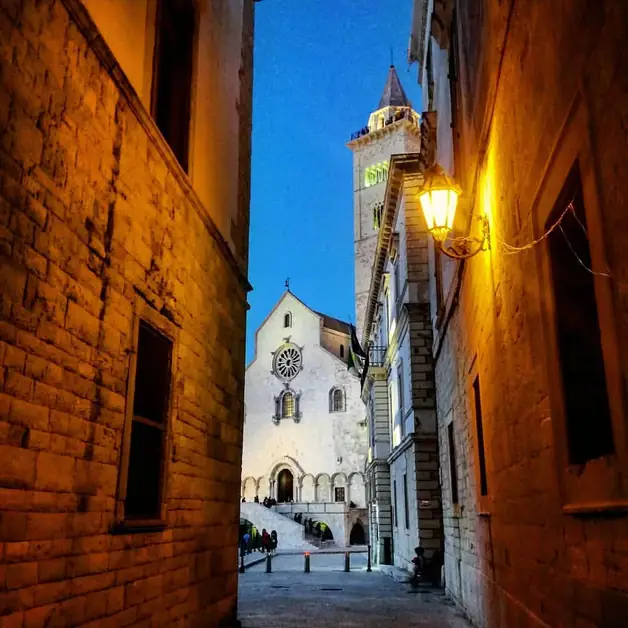
I visited during a summer vacation in Trani. I stayed at a B&B in the historic center, which is entirely ZTL. So, I left my car at the free parking in Piazza Re Manfredi, next to the Cathedral, and walked everywhere. That's how you explore Trani: Castello Svevo, the port, Jewish quarter, and the municipal villa are all close by.
Just leaving the Basilica, I saw a sign for the Vasca di Boccadoro. I didn't feel like driving, even though it's about 10 minutes by car along the seafront to Barletta or via SS16 (Boccadoro exit). The day was bright but not too hot, so I started considering options: it's about 4 km (45-50 minutes) on foot, but biking along the coast is more enjoyable.
I chose the bike. There's a bike-sharing station in Piazza Duomo, just a few meters from Castello Svevo. I got an electric bike there. The service is app-based (VAIMOO): download it, add payment info, and unlock the bike with a QR code. The cost is time-based (0.10 € per minute) with no unlocking fee. To end the rental, return the bike to a station and finish the ride in the app.
The path is easy, though not always well-marked. Sometimes, I had to rely on intuition, especially near the natural area. The bike path helps, running from the center along the sea with a dedicated lane. It follows the Adriatic Cycle Route and the Via Francigena del Sud, so you often meet cyclists or walkers.
Along the way, there are several access points to the sea, small coves accessible by steps. With a swimsuit, it would be easy to stop for a swim, but I continued. Past the urban part, the bike path becomes unpaved, and the environment changes quickly.
At the Vasca, the feeling is different from the rest of the coast. It's not a place "built" for visitors. There were past attempts to organize it (signs, small services, paths), but now it feels more spontaneous and, in some spots, disordered.
From a naturalistic perspective, though, the place has real value. It's a coastal wetland, and if you stop quietly, you'll see why birdwatchers love it. You can spot grey and white herons, egrets, coots, kingfishers, and, at the right times, elusive species like the bittern. The environment is lively even at a smaller level: amphibians, insects, continuous sounds between water and reeds.
At first, I was hesitant to venture into the denser vegetation. Not because of nature, but due to the somewhat isolated atmosphere. It's fair to say: the area has a dual nature. By day, it can be a peaceful oasis, but recently, there have been reports of neglect and unsettling visitors. It's best to visit during the day and avoid nighttime.
After seeing Trani -- its Cathedral, the museums, even the vibe of the Tango Festival -- what stayed with me most was the silence: that of a more authentic nature.