Trani Cathedral a blend of history and natural beauty
The Trani Cathedral is a symbol of history and natural beauty.
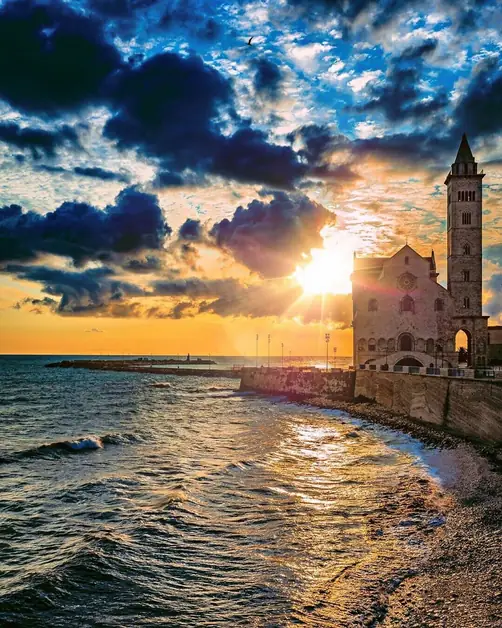
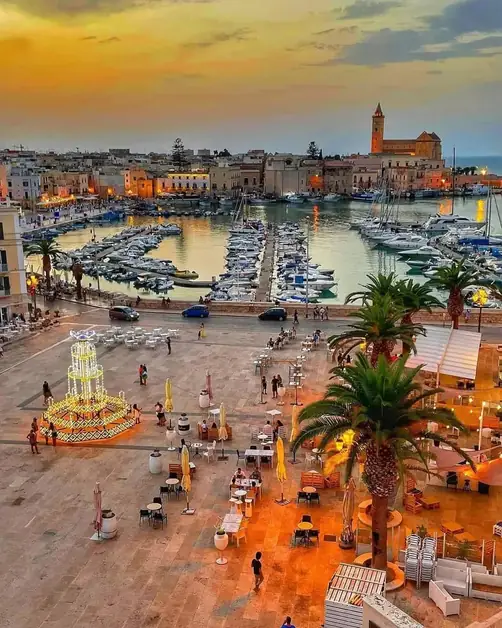
The first time you see the Basilica Cattedrale Maria Santissima Assunta in Trani, the striking thing isn't just the Romanesque style--though that's clear--but its location. It's right by the sea. Not "near the sea": literally on the sea. This completely changes how you perceive the building.
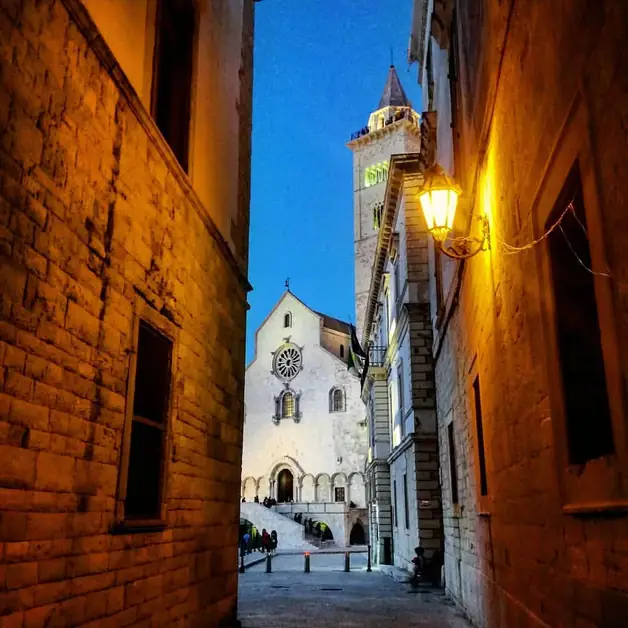
Walking from the port takes just a few minutes. You see it slowly appear, made of that light stone typical of Trani. In the light, it looks almost white, but it's actually pinkish. The color changes a lot depending on the time: bright in the morning, warmer at sunset.
There aren't any tall buildings around. The structures stay low, giving the cathedral a space that's rare in historic centers today. You don't have to search for it: it dominates the scene.
As you get closer, you notice the side stairs leading up to the main entrance. It's not an immediate entry; there's a small "approach" that takes you upward. The bronze portal is topped by a large rose window, and from outside, you can already sense the three-nave structure inside.
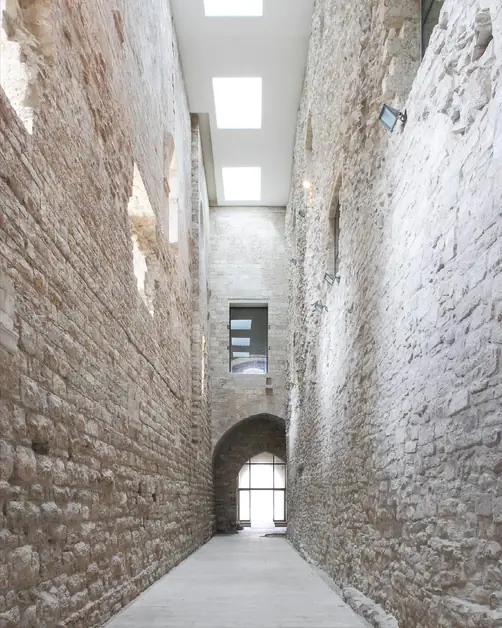
Inside, the feeling changes. The outside is compact and solid. But inside, it's more complex: pointed arches, columns dividing the naves, and a mix of trusses and cross vaults. It's not a richly decorated church, but it's not plain or empty either. It has a balance that makes it pleasant.
One thing often missed is the vertical layering. Below the square level is the church of Santa Maria della Scala. Even lower is the crypt with Saint Nicholas the Pilgrim's relics. This structure doesn't just rise; it also goes down. You might not notice this on a quick visit.
The bell tower, added later, completes the ensemble. If you find it open, climbing is worth it. You get a different view of the city, though the hours aren't always clear.
Trani Cathedral isn't just a famous example of Apulian Romanesque. It's a place where location matters as much as architecture. Viewing it from the port or sea changes the experience. This might be why it stands out more than other churches on the journey.
The only real downside, if you must find one, is the cost to climb the bell tower. Five euros might seem a bit much, especially for a family. It's a common trend in Italy now – you pay to enter Juliet's house in Verona, or certain areas of the Trevi Fountain in Rome. Some might find the price-experience ratio a bit off-putting.