Why does Peschici resemble Santorini?
The white houses and alleys of the village resemble Santorini, but Peschici retains the layout of an authentic medieval village.
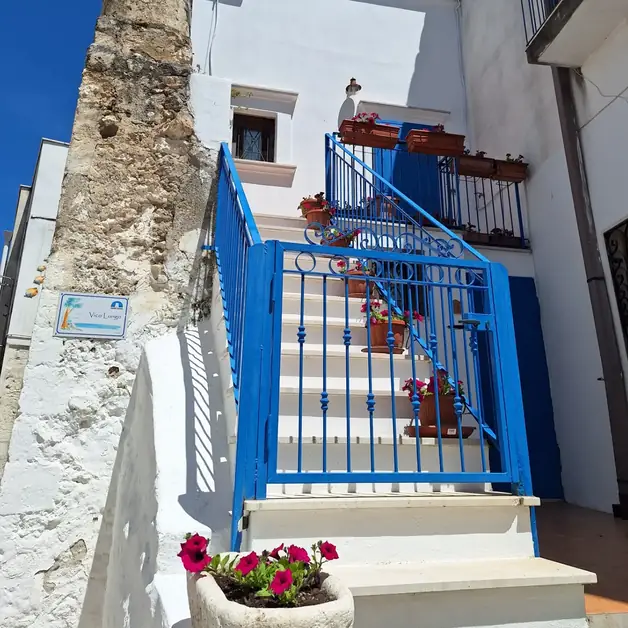
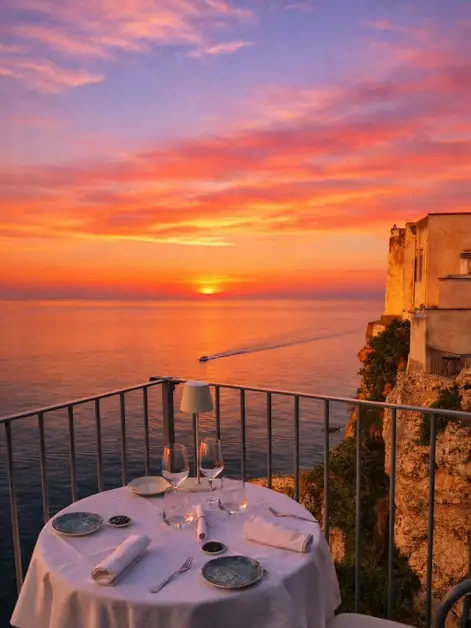
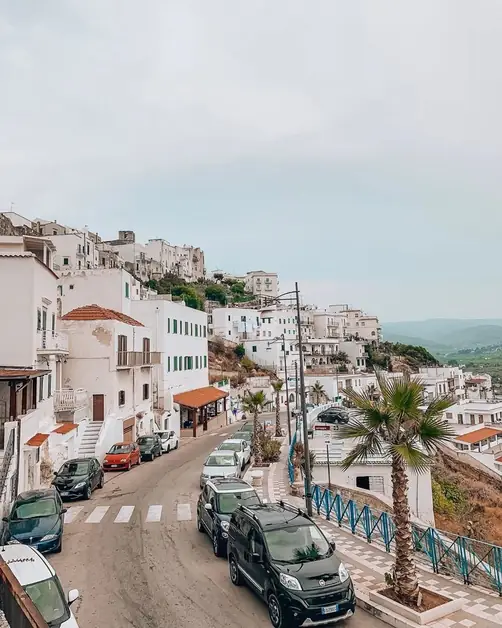
When you look at a photo of Peschici's historic center, many tourists immediately think of Santorini. It's not a coincidence: the white houses, narrow alleys, terraces overlooking the sea, and the intense summer light create an atmosphere similar to the Greek islands.
If you want to photograph this view, the best spot is walking in the historic center between Corso Garibaldi and the alleys leading up to the castle. Here, you'll find the typical white houses overlooking the sea that made Peschici famous. The best times for photos are early morning and late afternoon, when the light is softer and the streets are less crowded.
Actually, Peschici and Santorini have completely different origins and histories. Peschici is a medieval fortified village built on a promontory in the Gargano, while Santorini is a volcanic island in the Cyclades. The comparison mainly comes from the urban landscape and the Mediterranean atmosphere common to both places.
The white of the houses also adds to this impression. In Peschici, facades were traditionally covered with lime, a cheap material that reflected the sun, helped keep interiors cooler, and had sanitizing properties. Walking through the alleys, the contrast between the white houses, the blue sky, and the sea in the background inevitably brings to mind images many associate with Santorini.
For this reason, those visiting Peschici for the first time often feel like they're in a small corner of the Mediterranean with an atmosphere similar to the Greek islands, while still maintaining a completely different identity.
What Makes Peschici Different from Santorini
The similarity with Santorini is mostly visual at first glance. Walking through the alleys, you find elements telling a completely different story.
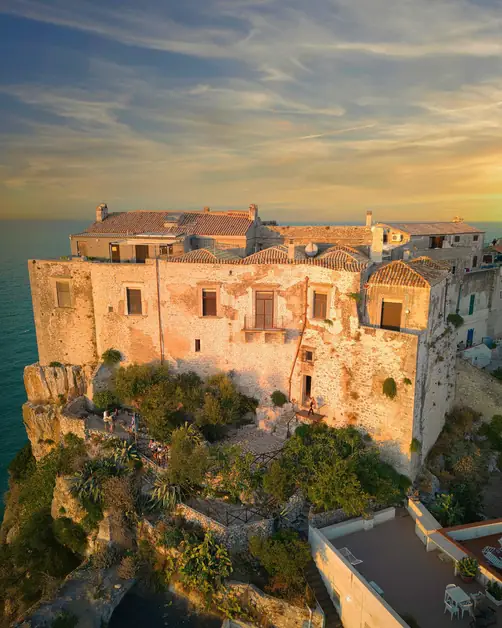
The most obvious feature is the Castle of PeschiciCastle of Peschici. Built at the highest point of the promontory, it overlooks the village and the surrounding sea, reminding us of Peschici's defensive role for centuries. The walls, towers, and strategic location show a past focused on coastal control and defense against sea raids.
The urban layout also follows a different logic compared to the Cyclades villages. Main streets lead to the castle and branch into a dense network of alleys, arches, and stairways that follow the rock's shape. The historic center wasn't designed for large panoramic squares but to use every available space on the promontory, making it harder for invaders to access.
To visit the historic center, it's best to leave your car in the external parking lots and continue on foot. In just a few minutes, you reach the village's alleys, mostly pedestrian and filled with numerous stairways. It's the best way to discover views reminiscent of Santorini and stop at small viewpoints overlooking the Adriatic.