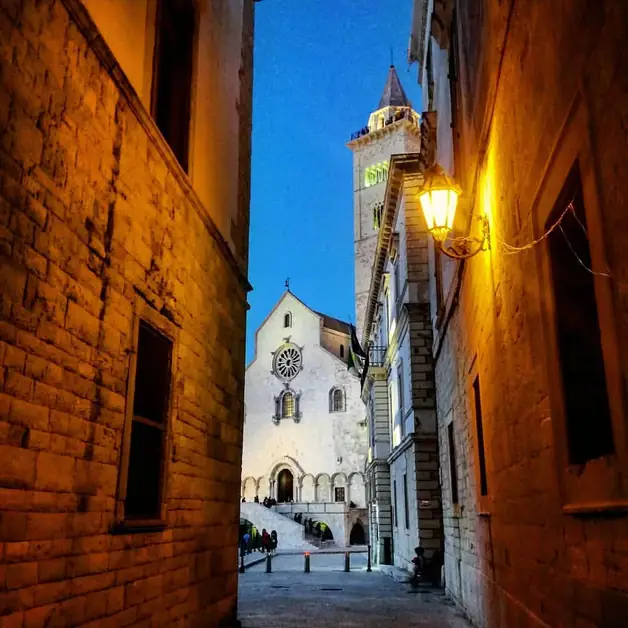
Complete guide to Monastery of Santa Maria di Colonna
Discover how to reach the Monastery of Santa Maria di Colonna in Trani.
Trani isn't just the Cathedral. Part of its history lies outside the busy center.
My wife and I were near the Cathedral. We initially planned to visit Trani's famous Cathedral. But then, on a whim, I thought of visiting the Monastery of Santa Maria di Colonna.
It was a spur-of-the-moment decision. Other tourists recommended it to me, and it turned out to be one of my favorite experiences.
We started from the port in the late afternoon. In July, mornings are too hot for walks. It quickly becomes tiring instead of enjoyable. But in the evening, the air and light change.
The route is simple. Take the lungomare Cristoforo Colombo and keep going straight, with the sea on your left. It takes about 25-30 minutes one way. Walking there and back takes around two hours total. No tricky turns or confusing stops. It's a path you can follow without much thought.
At first, you're still in busy Trani. But gradually, it gets quieter. Fewer people, less noise. Walking becomes easier, with fewer crowds and a calmer pace.
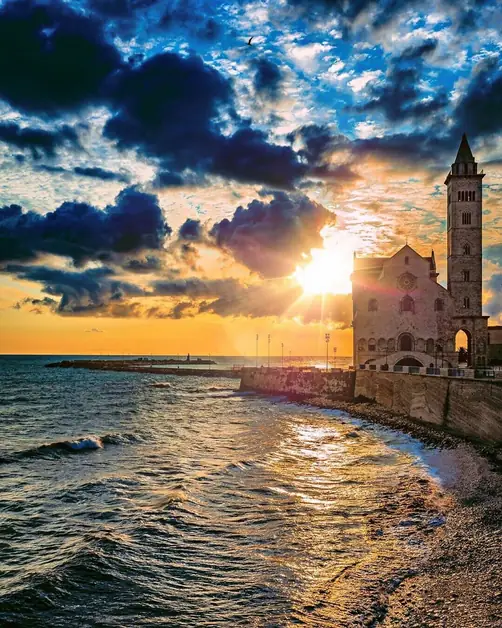
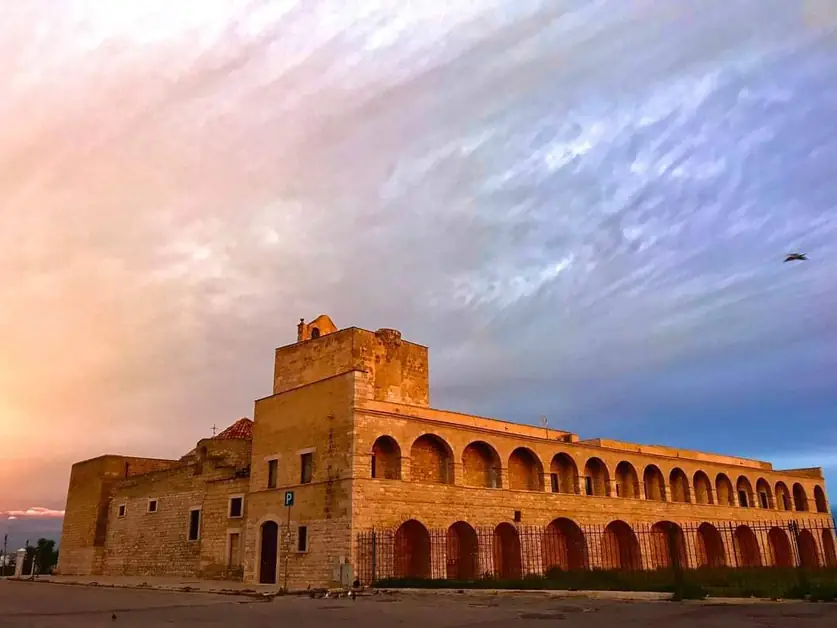
Soon, the monastery appears ahead. It stands on a strip of land jutting into the sea, its light facade contrasting with the blue water.
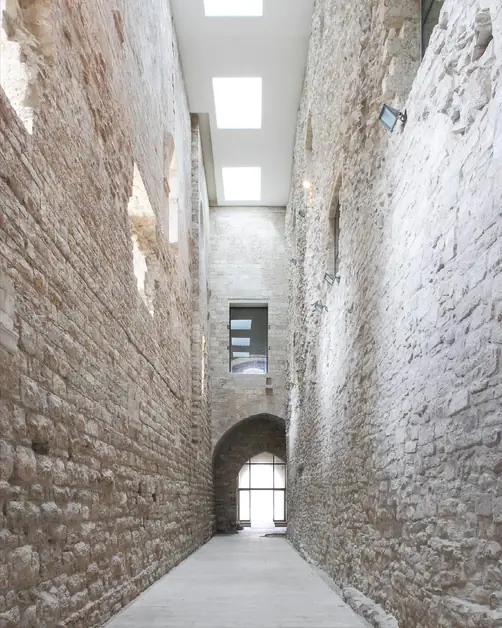
We entered without paying anything. The cloister is simple. There's not much to "visit" in the classic sense. But the location changes everything. You're by the sea, yet more isolated than the busy Cathedral. It creates a distance that's not physical but atmospheric: more silence, less traffic.
At that moment, I felt closer to the rhythm of those who lived there. It's a kind of peacefulness that isn't forced; it just happens. With the sun setting, this feeling was even more noticeable for us.
The structure itself is basic, but the overall impression makes the walk worthwhile.
A quick historical note helps give context: the complex began in the 11th century under the Normans. For centuries, religious communities lived there (first Benedictines, then Franciscans). Its exposed position made it vulnerable to sea raids, which marked its history. In later centuries, it changed functions many times -- from noble residence to quarantine station, and then military and civil uses. But its simple design and direct connection to the sea remain the same today.
On the way back, we took the bus to avoid walking the whole way. In a few minutes, we were back towards the center of Trani.
In the evening, we went to dinner at Trattoria da Rosetta in the historic center. The place is nice, with some tables outside along a side street. It's quite cozy, suitable for couples or small groups.
The menu isn't particularly large. We ordered two appetizers (friselle with tomato and stracciatella, and bruschetta), then a green salad as a side and two main courses: cavatelli with potatoes and mussels, and trofie with sweet pesto and walnuts.
We drank water and a Coke. No desserts. For two people, we spent about 40 euros total, so around 20 euros each.