Visiting Foggia: historic center, squares, alleys, and hypogea
A surprising stop before the Gargano, among medieval testimonies, eighteenth-century architectures, traditions, and flavors
Foggia is often seen as a stopover to the Parco Nazionale del Gargano and popular spots like San Giovanni Rotondo, but its center is worth a visit. Plan for about 3-4 hours for a first walk, enough to see the main areas of the center.
Don't expect a perfectly preserved classic Puglian historic center. The city was heavily hit by the 1731 earthquake, which destroyed many buildings, and later by World War II bombings.
The center is quite large and consists of areas built in different eras. Next to the part developed mainly between the 18th and 20th centuries, there's the oldest part of the city, dating back to the Middle Ages, with a system of underground hypogea beneath it.
Things to see include the Duomo, from the 12th century, and the Arco di Federico II, now attached to the Civic Museum, a remnant of the ancient imperial palace.
It's worth walking along via Arpi, one of the city's historic streets, and reaching Piazza Purgatorio and the Chiesa del Purgatorio. In this area, you'll find the Ipogei Urbani, underground spaces linked to the history of Frederick II's Palatium. The most important and studied is the hypogeum of via San Domenico, near the Chiesa del Purgatorio.
Outside the oldest core, the center expands with tree-lined avenues, squares, and buildings developed mainly between the 19th and 20th centuries.
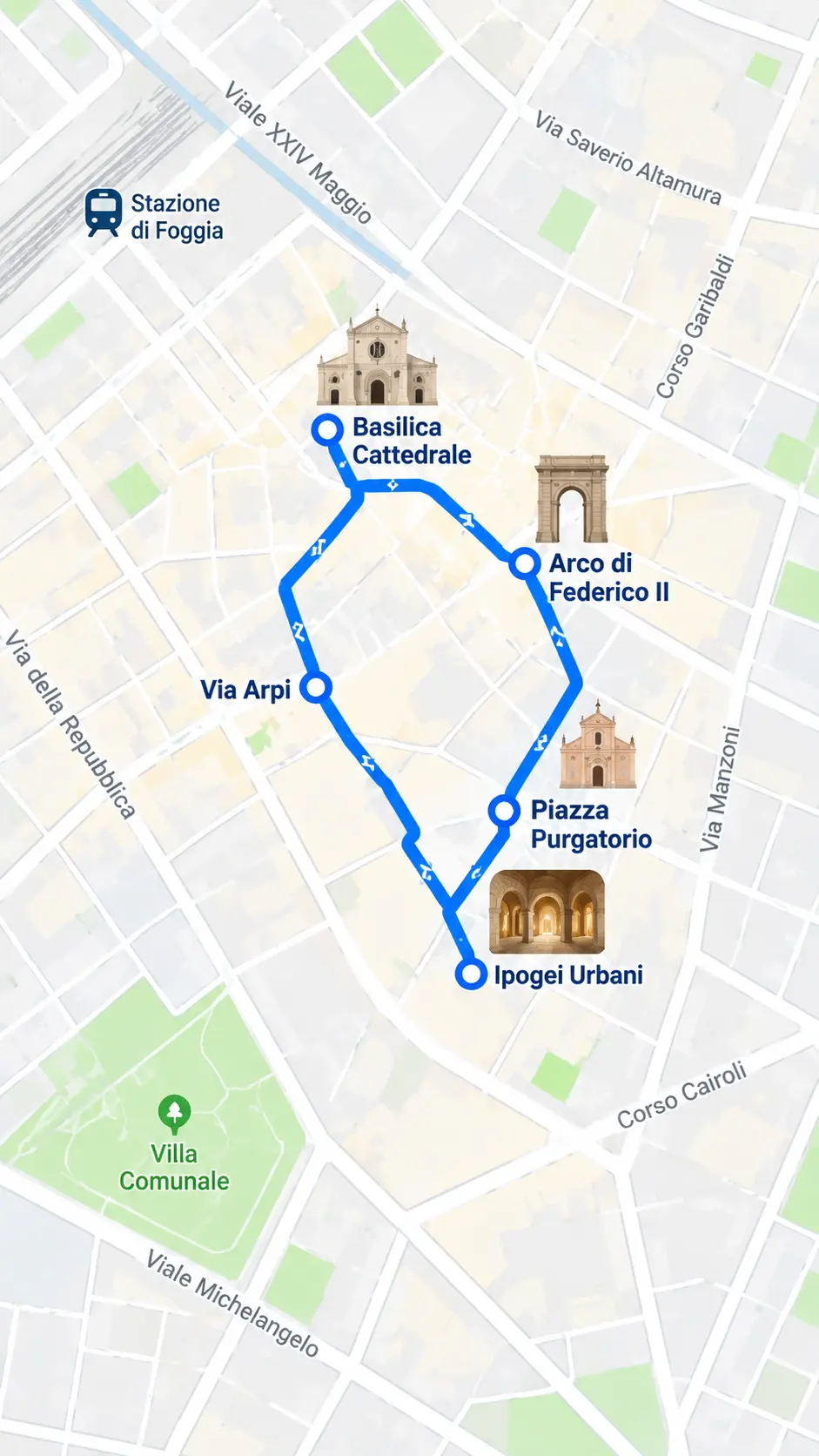
Parking in central Foggia isn't easy. If you arrive by car, it's smart to decide where to park and then walk. You can reach main attractions on foot.
Is visiting Foggia's historic center worth it?
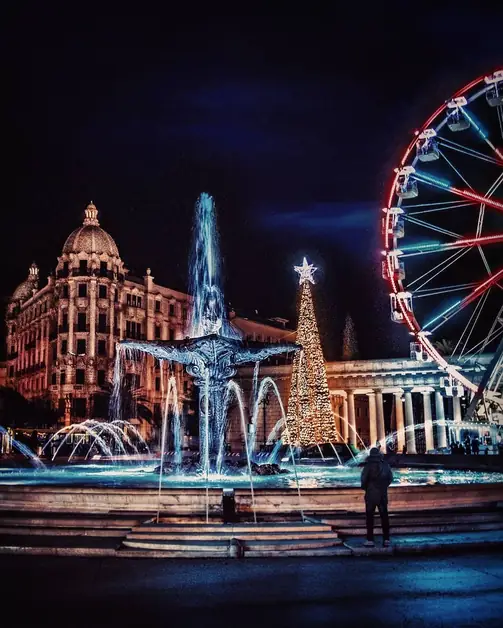
I visited Foggia during Christmas and found it truly beautiful, especially the lit streets and squares downtown.
The oldest part needs some renovation in places, but it still has elements that tell the city's history. These are worth discovering slowly. Personally, in the evening, I'd stick to busier areas, especially if you're new to the city.
One thing that surprised me is the size of the center: it's much bigger than I expected and not just a few streets or a single square.
And there's another thing to remember: the food in Foggia is excellent. Restaurants, trattorias, and local spots make it worth staying a bit longer instead of just passing through. During my visit, I especially enjoyed the traditional favetta e cicoria, made with fava bean puree and chicory.