Lucera from Foggia without a car: what to see in a few hours
Direct train, Roman amphitheater, Swabian-Angevin fortress, and historic center: an easy half-day excursion
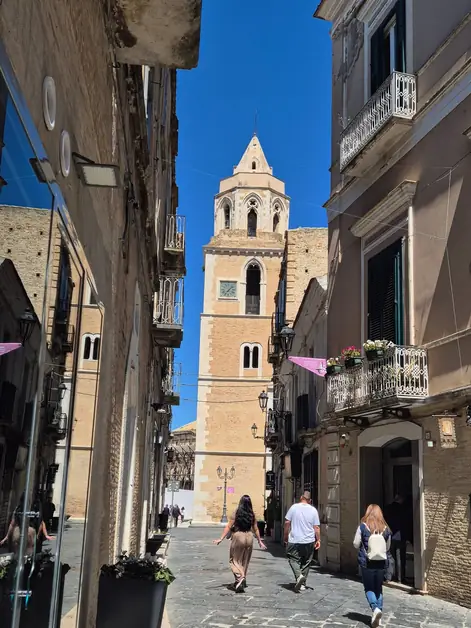
If you're in Foggia and have some free time, Lucera is easy to reach without a car. It's about 20 km from the city and makes a great trip to explore a lesser-known part of the province compared to Gargano.
You can get there directly from Foggia with trains from the Ferrovie del Gargano, not Trenitalia. The journey takes 20 minutes and the ticket costs less than 2 euros.
Lucera has a particularly rich historical heritage. In 2024, it was among the 10 finalists for the title of Italian Capital of Culture 2026.
Lucera has ancient origins. Its area holds evidence from the Neolithic and Bronze Age to Roman times, and medieval events linked to Frederick II and the Angevins.
This long history is still visible in the historic center, with narrow streets, religious buildings, and monuments from different eras. The various dominations left very different architectural marks, making the visit interesting, especially from a historical and cultural perspective.
Outside the town, olive groves, wheat fields, and vineyards surround Lucera and lead into the agricultural area of the Monti Dauni.
What to see in Lucera
For a first visit, you don't need a whole day. The Augustan Amphitheater, Cathedral, and Civic Museum can be seen in about a couple of hours, including walking around the historic center. Add time to reach and visit the Swabian-Angevin Fortress.
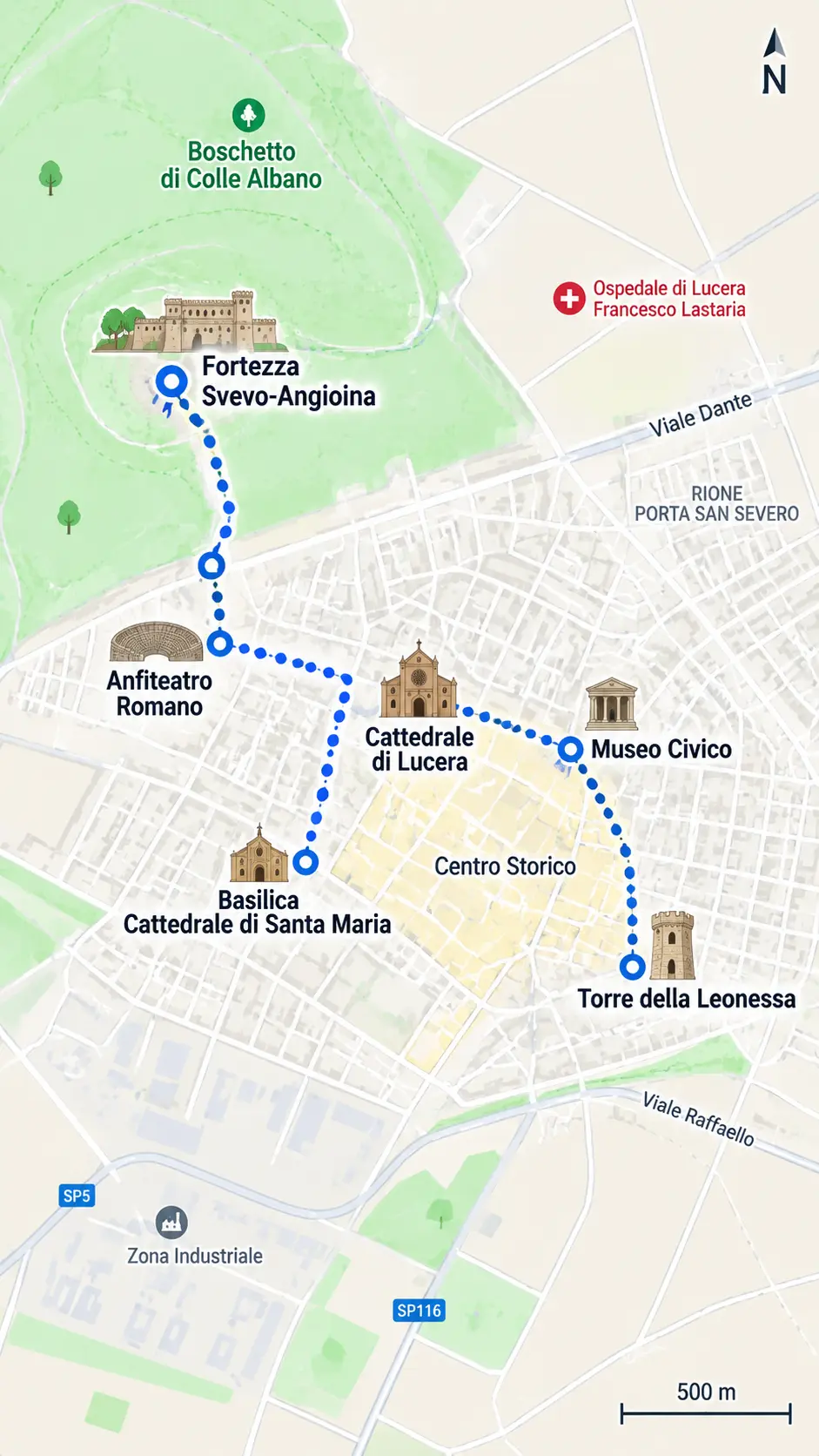
One place where you can immediately grasp the city's importance in Roman times is the Anfiteatro Augusteo. Built during the Augustan age, it could hold between 16,000 and 18,000 spectators. It's one of the most important monumental testimonies of Roman Lucera.
I visited the amphitheater during a Biagio Antonacci concert. In my opinion, it's perfect for such events, much more atmospheric than a stadium. Especially in the evening, attending a concert here lets you feel the history and experience the amphitheater differently.
The second major stop is the Fortezza Svevo-Angioina, located on Colle Albano. This area shows a completely different phase of the city's history: Frederick II built his Palatium here in the 13th century. Later, the Angevins constructed the large fortified walls.
The first thing that strikes you upon arrival is the imposing wall, enclosing a vast space now mostly a lawn.
Walking around the fortress takes about 25 minutes. For the internal visit, in my experience, twenty minutes is enough. You can enter the only accessible tower, which I found in excellent condition, and see the entire area within the walls.
Next to the fortress, there's a large free parking lot. When I visited, the entrance ticket cost 3 euros and could be paid only by card, not cash.
In the historic center, you'll find the Cattedrale di Santa Maria Assunta, built in the Angevin period. Around it, there's one of the most interesting areas to explore on foot.
To delve deeper into the city's long history, you can visit the Museo Civico di Archeologia Urbana Giuseppe Fiorelli. It houses artifacts from Lucera and its surroundings.
Visitors to this part of Puglia often focus on Foggia's more famous spots, like San Giovanni Rotondo and the Gargano destinations. But the area offers much more: Lucera is one of the most interesting examples.