Complete guide to the MegaMuseum in Aosta
Discover everything about the MegaMuseum in Aosta, from transport to exhibits.
I arrived in Aosta by train. As soon as I left the station, I decided to walk to the MegaMuseum. It's just over a kilometer away, taking about 15 minutes. The route is simple and lets you soak in the city's vibe. The museum is in the western district, on Saint-Martin-de-Corléans Street, number 38. It's a quiet and easy-to-reach area.
Before leaving, I read a bit about the ancient history of the Aosta Valley. I wanted to understand what I'd find at the MegaMuseum. I learned that human presence here dates back to the second half of the 5th millennium BC. In the Saint-Martin-de-Corléans area, ritual furrows were carved into the ground. These weren't actual villages but places for rituals and burials. Necropolises were found in Champrotard, near Villeneuve, and in Vollein, in the Quart commune. Around the mid-4th millennium BC, the Copper Age began. This period brought changes to the valley's communities.
I also knew the MegaMuseum site was discovered by accident in 1969. It happened during construction work near the old Saint-Martin-de-Corléans church. Archaeologists quickly realized they found something significant: a large area with well-preserved prehistoric evidence. With this information in mind, visiting the site was even more intriguing.
The museum entrance is well-marked, so you won't get lost. If you prefer the bus, take one of the city lines heading to Saint-Martin-de-Corléans. They stop near the entrance.
If you're driving, the recommended exit is Aosta Ovest-Saint-Pierre. From there, it's just a few minutes to the museum. There are public parking spots nearby, but on busy days, it might be better to use the downtown parking garages.
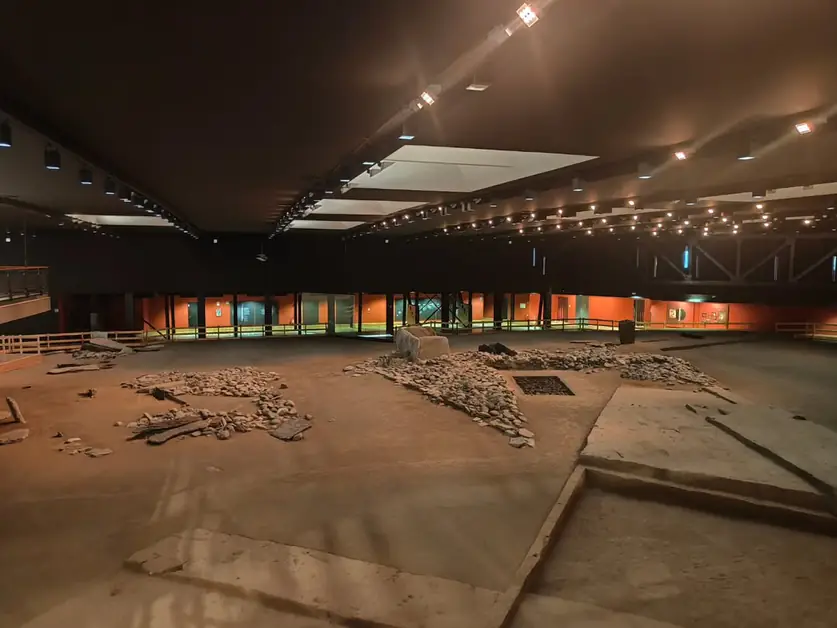
Once inside, I was struck by the size of the archaeological area. Elevated walkways let you see everything from above and follow the path clearly. The atmosphere is unique: you're walking above remains over 5,000 years old.
The museum covers about 10,000 square meters and tells 6,000 years of history engagingly. It's surprising for the quality of artifacts and their presentation. It almost overshadows the city's famous Roman sites. The structure itself is impressive, with a modern style reminiscent of Paris's Pompidou Center. It fits well with the idea of a large space dedicated to research and valuing the past.
Our guide, archaeologist Donatella, led us through the entire path. She took us back in time, 6,500 years ago. Her explanations were clear and passionate, making even the Roman era section more interesting. The staff was kind and professional, creating a pleasant experience from start to finish.
I found the ritual plowings, sacred wells, and collective ritual areas fascinating. The anthropomorphic steles are among the most impressive elements. They're tall and carved with shapes that evoke symbolic figures. Sections on Bronze and Iron Age burials complete the story well. Multimedia panels and immersive spaces help you understand how these places were for prehistoric communities.
I spent about an hour and a half on the visit. The path is smooth, but I often stopped to read explanations, view artifacts from different angles, and follow multimedia content. The walkways invite you to observe every detail calmly, so time flies by unnoticed.
I would say two hours is a good estimate for exploring the museum without rushing. If you prefer a quicker visit, you can spend less time. But if you love to dive deep, you might stay longer, especially if you get caught up in the videos and immersive sections.
The MegaMuseum in Aosta offers affordable tickets to explore one of Europe's largest megalithic archaeological sites. A full ticket for a self-guided visit costs exactly 7 euros. A reduced ticket is 5 euros for large groups or specific agreements, and 3 euros for young people aged 19 to 25. It's free for those under 18, disabled visitors with a companion, and holders of special museum subscriptions, with a "Aosta Archaeological" combo option for multiple sites.
Visiting the museum early in the morning, around 10, ensures a quieter and brighter experience, avoiding afternoon crowds. In summer, from 9 to 11, natural light highlights the menhirs and underground structures. In winter, choosing the 11 o'clock slot lets you enjoy guided tours without rushing.
The museum closes every Monday, as well as on December 25 and January 1. It follows seasonal hours from October to March (10-18) and from April to September (9-19) on open days. This weekly break allows for maintenance and preservation of delicate archaeological finds, making it essential to plan your visit from Tuesday to Sunday.
Buying tickets online through the MiDA Ticket platform helps skip the lines, especially in high season. But I bought mine at the entrance. Maybe it's my age 😄.
Audio guides are available to delve into megalithic, neolithic history, and local legends with narratives in Italian, French, and English. They provide extra details on popular beliefs and sacred-profane overlaps, perfect for those who prefer a self-paced visit.
The visit allows you to freely wander the one-hectare covered area, with suggested routes but no obligation. This can be ideal for lingering over the menhirs and dolmens.
After leaving the museum, I walked towards the center to enjoy a quiet lunch. In just a few minutes, you reach an area full of restaurants and cafes. It's easy to find something good without going far. It's a pleasant way to take a break after the visit and continue the day calmly.
If you want to continue with archaeology, you can walk to the Roman Theatre. But if you prefer a relaxing stroll, explore the streets around Piazza Chanoux. The area is rich with shops, venues, and spaces to observe the city, ideal for ending the visit with a bit of urban atmosphere.