Certosa di Padula: the stone edging of the spiral staircase
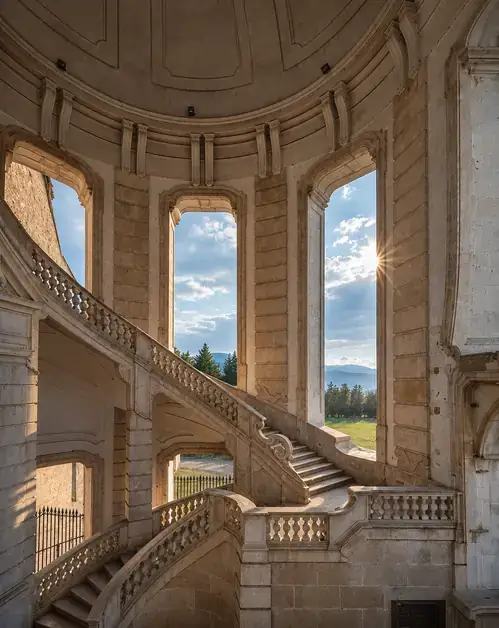
The steps of the staircase designed by Gaetano Barba are joined by an edging carved from the same stone, which continues up to the balustrade
When we visited the Certosa di San Lorenzo in Padula, we were surprised by the architectural richness of a place devoted to prayer, silence and an austere way of life. The spiral staircase leading to the Library is perhaps one of the most striking examples of this apparent contrast.
To understand it, you need to know something about the Carthusians, the monastic order founded by San Bruno in the 11th century. The monks lived apart from the world, devoting themselves above all to solitude and prayer. They spent much of their time in their own cells, arranged around a large cloister, and came together only at certain times of day.
The simplicity of daily life did not stop Carthusian monasteries from becoming architectural complexes of great value over the centuries. Some communities accumulated considerable wealth through donations, landholdings and farming. These resources allowed them to expand and embellish their buildings, commissioning talented architects and artists to do the work.
The spiral staircase of the Library at the Certosa di Padula
Designed by the architect Gaetano Barba, a pupil of Luigi Vanvitelli, it was built entirely of stone using an unusual construction technique.
The staircase winds upward in a spiral. The steps are joined by a raised edge carved from the same stone, which follows the ascent to the balustrade, also made of stone.
It simply takes you to the upper floor, yet it was designed with such care.
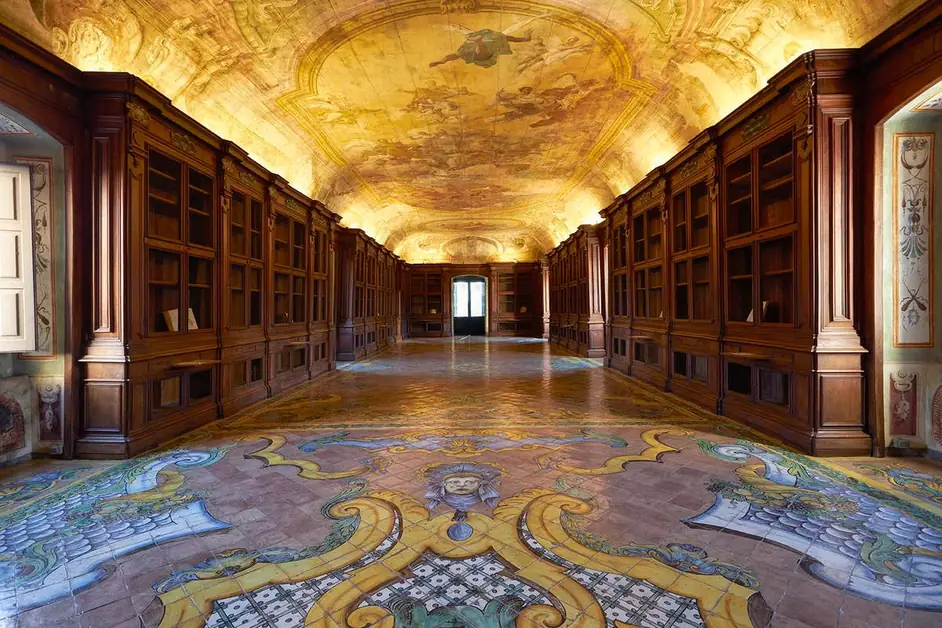
The staircase seems to curl around itself, leading to one of the most important rooms in the Certosa: the Biblioteca.
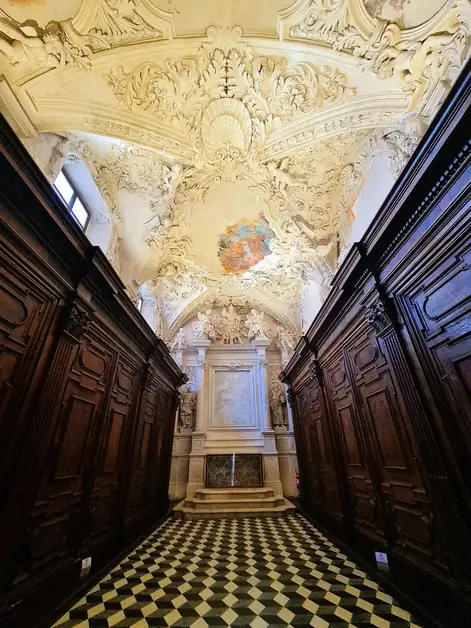
This room once held tens of thousands of books. Today, only a small part of that vast collection remains: around two thousand volumes.
The Biblioteca is just one of the many rooms to explore inside the Certosa. During our visit, we noticed that not every room has explanations. In such a vast complex, it's easy to lose the thread of the story. That's why we recommend a guided tour, even if it costs a little more.
If you're arriving by car, there's a parking area that costs 4 euros a day, some distance from the entrance. With a bit of luck, you might also find a free parking space nearby.