The museum rediscovering the peasant civilization of Matera
The Museum-Laboratory of Peasant Civilization in Matera tells the story of rural life and local traditions, offering an immersive and educational experience.
Matera and the question you can’t unthink
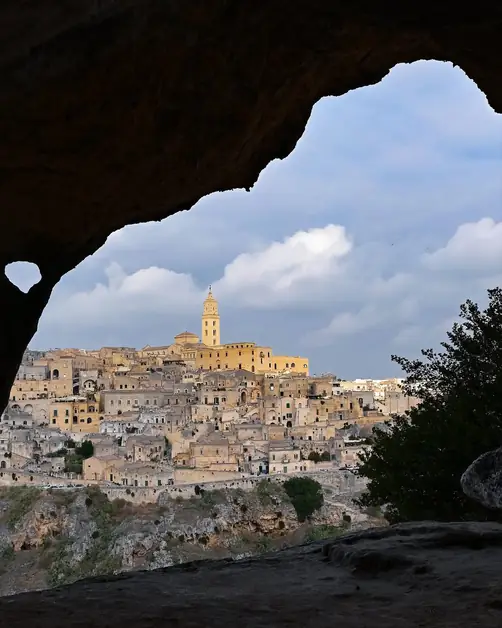
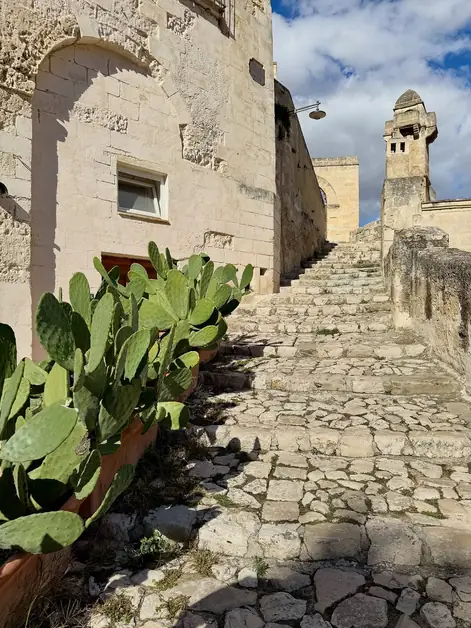
Matera has a way of planting a single question in your mind almost immediately: what did real life look like inside this stone? You walk the narrow lanes of the Sassi and notice low doorways, steps worn smooth, arches that seem designed to hold onto shade. Then the “postcard effect” kicks in—viewpoints, terraces, the kind of panoramas that beg for photos.
It’s stunning, of course. But if you want to understand what sits underneath the beauty—work, fatigue, everyday ingenuity—the Museo-Laboratorio della Civiltà Contadina is the stop that quietly changes the tone of your visit.
This isn’t a place where you simply “admire old objects.” It’s a place where you recognise gestures: hands that weave, mend, knead, sharpen, smooth. And suddenly the Sassi stop feeling like a stage set and start feeling like what they always were: a lived-in city, adapted and kept alive day after day.
The museum that tells the part of Matera you don’t immediately see
When people talk about Matera, the conversation often ends at the Sassi. That’s normal—they’re the city’s visual heart, the image you keep seeing in your mind long after you’ve left. But Matera’s story isn’t only architecture. It’s domestic economies, trades, and small solutions repeated for generations.
If you like arriving with a wider frame before stepping inside, it helps to skim the broader context in this guide to the fascinating history of the city of Matera . It makes a difference: what you’re about to see reads less like “folklore” and more like identity.
Inside the museum, the premise is clear. Rural life isn’t treated as something minor or quaint. It’s presented as a complex system—roles, tools, shared spaces, and skills that had to work together. That’s also why the museum can be surprisingly engaging for younger visitors: it doesn’t ask you to accept a romantic story. It puts evidence in front of you.
Donato Cascione and a collection built from patience
The museum was created by Donato Cascione, deeply connected to his roots and to the memory of the area. Today it’s run by the Associazione Culturale Donato Cascione, with Cascione as president. That “from the ground up” origin is easy to feel: there’s no urge to dazzle, just a steady desire to rebuild a world with coherence.
Before the rooms were set up, there was the phase people often overlook when talking about museums: collecting. Years spent recovering everyday objects and traditional work tools—the kinds of things that usually end up forgotten in a shed, or thrown away because they seem useless. Here, they become vocabulary. A tool isn’t just “a tool”; it’s a clue: how people lived, what they needed, how they solved problems with what they had.
There’s another key point, too: knowledge didn’t come only from books. The displays were shaped by reading about rural life, yes, but also by oral memory and the testimony of local elders. That difference matters. A text can describe a trade; someone who watched it being done can give you the detail you’d never find on a page.
Rooms that feel like homes, workshops, and shared life
The museum’s strongest choice is simple—and surprisingly powerful: it doesn’t just exhibit, it reconstructs environments. Objects aren’t placed on a shelf “to be looked at.” They’re returned to their natural context, alongside what completes them, inside a room that makes them believable.
That approach makes the visit more physical. You realise rural life wasn’t a random collection of things; it was an equilibrium of spaces. Home and work weren’t separated the way they often are today—frequently they were the same place, the same rooms, the same routines. In the Sassi, that fusion is even more obvious because homes were carved, adapted, and often shared.
That’s why the museum doesn’t feel like a cold display. It feels like stepping into a place that was inhabited—quiet now, but still legible.
Why it changes the way you read the Sassi outside
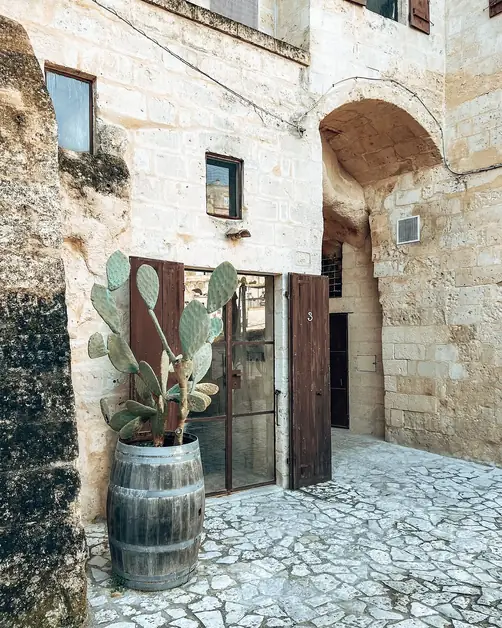
Think of this museum as the perfect “decoder” for the Sassi. After you’ve seen tools in their working context, doorways and courtyards outside stop being purely picturesque. You start noticing what a space was designed to do, not only how it looks.
If you want a quick refresher on what makes the Sassi so distinctive—beyond the views—this piece on the unique charm of Matera’s Sassi is a useful companion . It helps you keep the human layer in focus: the city as a living machine built around daily needs.
And if your itinerary includes time on the other side of the ravine, pairing the museum with a walk in the landscape that shaped local life can be incredibly grounding. Here’s a guide to exploring the Murgia Materana Park —a natural continuation when you want Matera to feel like a place, not a set.
What’s next: bigger spaces and hands-on workshops
At the moment, the Museo-Laboratorio covers around 500 square metres. The project includes an expansion that would double the surface area—a detail that matters because it signals something bigger than growth. It suggests a museum conceived as a living organism.
The stated goal is to strengthen the practical side of the experience, with workshops aimed especially at younger people. Not generic activities, but concrete crafts: papier-mâché work, pottery, basket weaving, and other hands-on skills that risk surviving only as words.
For travellers, it’s an appealing shift. You’re not only observing the past—you’re seeing how the past can become learning again. And there’s a message in that: preserving memory doesn’t mean idealising it. It means recognising real competence and techniques that once had a function, and that today can become culture, craftsmanship, and identity—especially in a city whose economy also leans on tourism.
Visiting rhythm, realistic timing, and one simple trick
Imagine arriving after a walk through the Sassi, with the pale dust of stone still on your shoes and sunlight still in your eyes. The moment you step inside, the pace changes: the sound drops, the air feels stiller, and you realise this is not a “scrolling” museum. It asks for slowness.
A realistic visit—done well—is about 60 to 90 minutes. Less than that and it can turn into a quick march through rooms. Much longer (especially on a packed travel day) can start to feel heavy.
The trick that saves the visit is almost embarrassingly simple: don’t try to see everything equally. Choose three environments and actually stay with them. Not ten seconds—two full minutes each. Let your attention move from the obvious to the small: signs of wear, how objects are positioned, the logic of the space.
The most common mistake is thinking the goal is recognising objects. It’s the opposite: understanding use. When you feel the urge to take a photo and move on, pause and ask one concrete question: What problem did this tool solve? It’s a small exercise, but it changes everything—because when you walk back outside, the Sassi look different. Still beautiful, but newly readable as spaces built to live and work.
If you’re driving, planning logistics in advance helps you keep that slower rhythm. Start with parking options for visiting Matera by car , and remember that the city also has a Limited Traffic Zone (ZTL)—rules can change, so it’s worth checking the latest notes in this ZTL guide for tourists .
Gli errori da evitare
🚫 Treating it like a checklist
This museum works when you allow yourself to slow down. Seeing less—and understanding more—wins every time.
🚫 Hunting only for the “rare piece”
The value here isn’t a single precious object. It’s the coherence of reconstructed environments. That’s where the story becomes tangible.
🚫 Arriving with zero context
If you come in “cold,” you might miss how tightly the museum connects to the Sassi outside. Even a short, mindful walk beforehand changes what you notice inside.
🚫 Squeezing it into leftover minutes
If you slot the museum between appointments, you flatten it. Give it at least a clean hour, ideally with a little buffer.
🚫 Assuming it’s “only for enthusiasts”
It’s surprisingly accessible—even for younger visitors—because it respects the past without putting it on a pedestal.
People often leave Matera with incredible photos. People who add this museum usually leave with something harder to capture: a clear mental picture of the daily life that built those views.
Want to turn your Matera trip into a stay that feels truly “inside” the Sassi? Start here: how to sleep in the Sassi of Matera for a unique stay