The Basilica of San Nicola
The Basilica of San Nicola in Bari is a masterpiece of Romanesque architecture and an important place of worship, symbolizing ecumenical dialogue between Catholics and Orthodox.
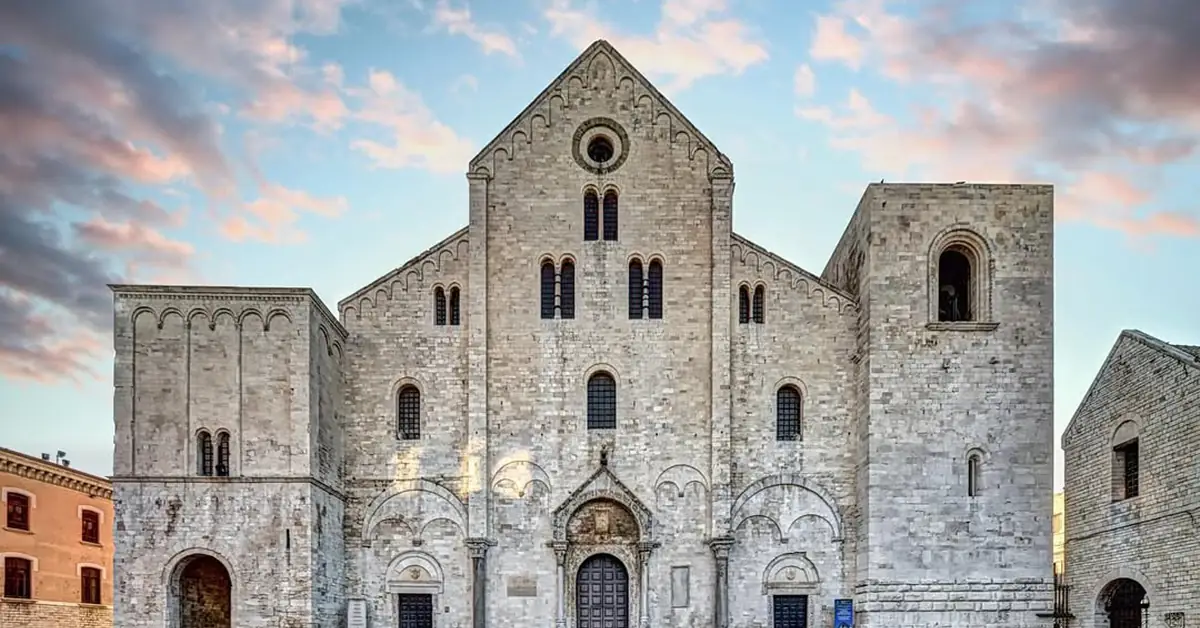
I'm a fan of churches and places of worship. I must say, the Basilica of San Nicola truly deserves a special visit. It's especially notable because it holds the tomb of one of the world's most revered saints.
We arrived just when the faithful could approach the crypt. They were there to pay homage and pray before Saint Nicholas's relics. Witnessing such intense devotion was fascinating, even for those more culturally than religiously inclined.
The Basilica itself is really pleasant. It's worth taking the time to explore it calmly. Even if you don't directly venerate the Saint, the atmosphere, history, and uniqueness make the visit deeply interesting.
Saint Nicholas lived in Myra, now in Turkey, where he was a bishop. He became famous for his kindness, generosity to the weak, and many attributed miracles. After his death, his relics stayed in Myra for centuries. Then, an event changed Bari's destiny forever.
In 1087, some sailors from Bari decided to move the Saint's relics to Italy. They wanted to protect them from possible profanation and destruction. From that moment, the city began building a large, solid church to house them. This led to the creation of the Basilica of San Nicola. The Saint's remains are still kept here today. The Basilica has become a major pilgrimage site, not only for Catholics but also for Orthodox Christians from around the world.
The building, designed in Puglian Romanesque style, has a severe and imposing facade. It's almost bare, showing clear Norman influences. Inside, though, it's surprising. The granite structure looks simple yet unusual. The supporting arches aren't perfectly parallel, and the layout seems deliberately irregular. The richly decorated ceiling adds to the contrast. It feels like it belongs to a church of a completely different style, creating an unexpected but fascinating effect.
The Basilica has two levels. The upper church is solemn and bright, used for liturgical celebrations. Going down to the crypt, where the Saint's relics rest, the atmosphere changes completely. The light is dim, the air smells of incense, and the silence invites reflection. Even without knowing every historical or religious detail, you feel a deep sense of peace. The crypt of San Nicola doesn't look like a typical tomb or reliquary. It has a quiet and intimate character. This simplicity, more than any monumental aspect, impresses the attentive visitor.
Every year, on May 9th, a fragrant substance called Manna di San Nicola is taken from Saint Nicholas's tomb. Monks collect it with great devotion, considering it a sacred relic. According to an ancient tradition, even an icon of the Saint "wept" this miraculous oil. It's a sign of his living presence and a reminder that, for many, miracles aren't just from the past.
Over the centuries, the Basilica has been a key stop for pilgrims from both the West and the East. The crypt, where Saint Nicholas's bones are, is the spiritual heart of the complex and continues to attract believers worldwide. In 1987, the building was given the title of Pontifical Basilica. For the people of Bari, it's a genuine symbol, deeply connected to the sea, devotion, and popular traditions.
Overall, the Basilica is a pleasant stop during a walk in the historic center of Bari. It's a place different from the usual, not overly decorated outside but surprising inside. It deserves a visit, even just to better understand the city's soul.
The figure of Saint Nicholas also inspired the legend of Santa Claus 🎅. He's the character who brings gifts and joy worldwide. This curious and fascinating connection makes the Basilica even more special and universal.