Puglia in winter: what to see and why it's worth visiting
Mild temperatures, lower prices, and fewer crowds make cities, villages, and the coast ideal for an off-season trip
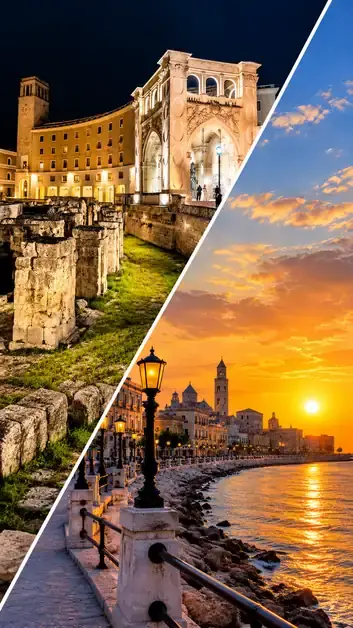
Puglia isn't just a summer destination. The Times recently listed it among European spots for winter sun and mild temperatures. In November, the average temperature is 17°C.
I realized this after visiting at different times of the year. In August, it was very hot, and at Monopoli, I spent most of the time at the beach. But when I returned in November, the temperatures were mild and pleasant. That's when I really started exploring Puglia.
I walked through historic centers, visited cities and towns, and traveled along the coast. There were also far fewer tourists. The days were often mild and sunny. When it rained, it usually lasted just a few hours.
The sea becomes mainly part of the landscape, not the main reason for the trip.
Another advantage of the off-season is the cost. Accommodations and tourist facilities are cheaper than in summer months.
Also, in November, since you're not coming to Puglia for beach days, you can plan much of the trip by train. You can choose cities and places served by the railway and avoid renting a car. This works if you visit cities along the Adriatic line.
Puglian cities to visit by train
Bari can be one of the easiest starting points. You can explore the historic center on foot, dedicating a day to Bari Vecchia, the seafront, and the city center streets.
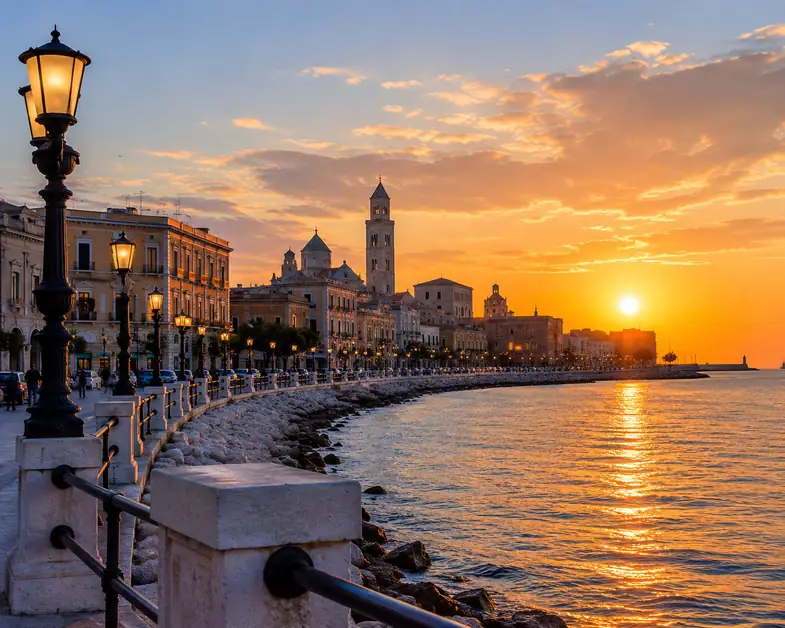
Polignano a Mare is easily reached by train. In winter, there's less crowd, and walking through the historic center and along the sea terraces is very romantic.
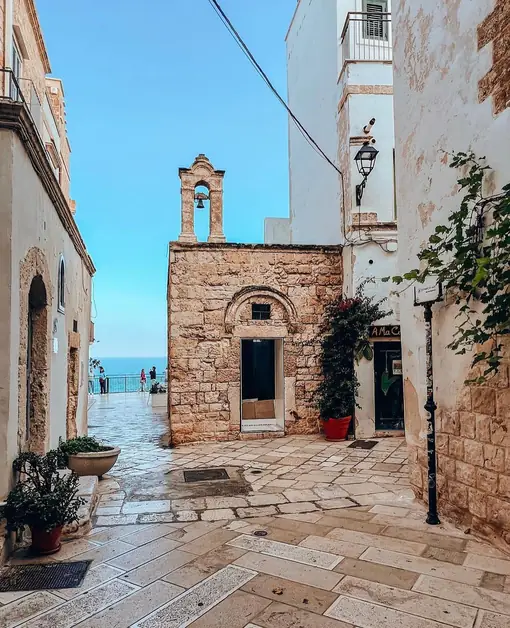
Monopoli is easily reachable by train, and the station lets you get to the center without a car. In winter, you can walk by the sea, visit the historic center, and stop for lunch before heading off again.
Ostuni with its historic center, white houses, and narrow streets, is worth a walk to the Cathedral.
Keep in mind, the train station is outside the town center. You need to take a bus to get there.
Brindisi is easy to reach by train. For me, it was a revelation. It's less famous than other Puglian cities, but it has a stunning port and a historic center that's easy to explore on foot.
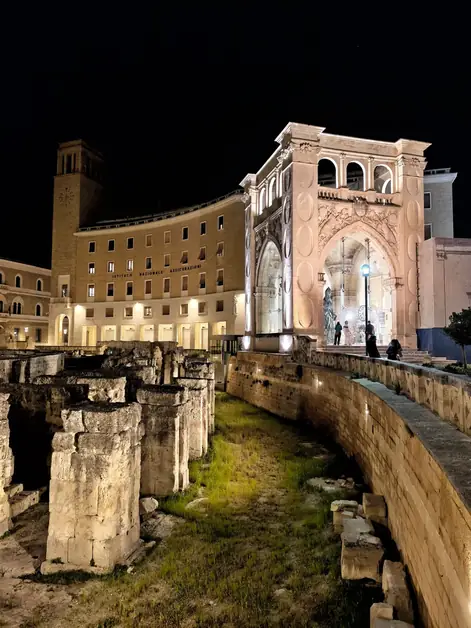
Lecce is famous for its baroque architecture. Here, the station is close to the historic center. You can visit Piazza del Duomo, Basilica di Santa Croce, and Piazza Sant'Oronzo, all walkable.
Peschici, Vico del Gargano, Vieste, and many other villages require different planning. Public transport isn't as straightforward. In these cases, a car is often the most practical solution.
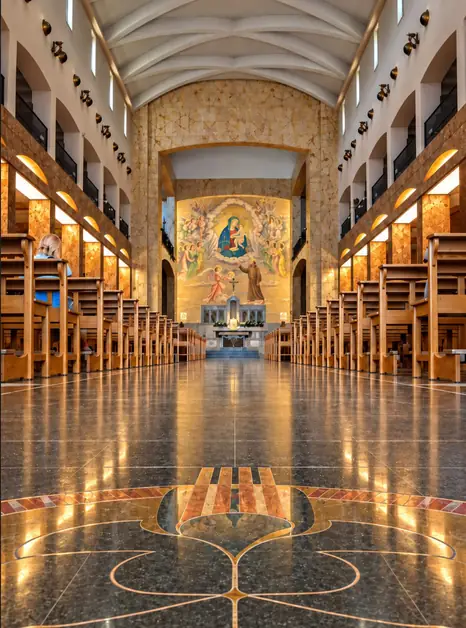
For four or five days in Puglia in winter without renting a car, I'd choose a linear itinerary along the Adriatic railway: Bari, Polignano a Mare, Monopoli, Ostuni, Brindisi, and Lecce. Or you could choose the Gargano, focusing on Vieste, Peschici, Vico del Gargano, and the Foresta Umbra. But in this case, a car is more practical. I'd also add San Giovanni Rotondo, one of Puglia's main religious destinations, linked to Padre Pio.
To truly know Puglia, I think you need two trips. The first can have Bari as a base, to visit the city, Bari province, and then head to the Gargano. The second can start from Brindisi, to explore Brindisi province and Salento.
If you land at Bari airport, it's convenient to stay in Bari. You can also choose an area outside the center, as the city is well-connected. From here, many places can be reached by train. If you want to visit the Gargano or reach places like Martina Franca, a car becomes more practical.
If you land at Brindisi airport, I recommend staying in Brindisi. The city is a great starting point to visit the province and Salento. Here too, several stops, including Lecce, can be reached by train.
My advice is not to try to see all of Puglia in a few days. It's better to choose one part of the region and leave the other for a second trip.


