Free Activities to Do in Courmayeur
Learn how to visit Courmayeur without spending too much.
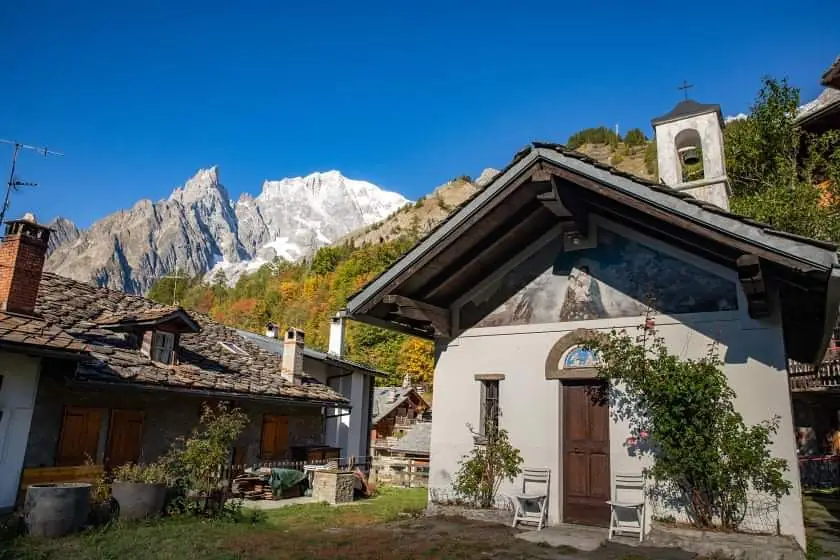
Courmayeur is the last town in the Aosta Valley before reaching France through the nearby Mont Blanc tunnel. It's the westernmost municipality in the region, bordering both France and Switzerland, though it doesn't have direct access to Switzerland. This prime location at the foot of Mont Blanc makes it one of Italy's most charming alpine spots, but also one of the most expensive when it comes to travel budgets.
The challenge of a budget weekend
Going to Courmayeur with the idea of spending little might seem tough, especially given its reputation as an elegant destination. But with a bit of planning, you can enjoy a full weekend without overspending. Let me tell you what my wife and I did during a two-day getaway, trying (mostly 😄) to avoid unnecessary expenses. This might help if you're planning a similar weekend.
We had a clear goal: keep traveling whenever we can, without letting the budget hold us back. Once in Courmayeur, we looked for everything exciting that didn't involve expensive attractions. Luckily, the town and its surroundings offer many beautiful places to see on a budget.
The charm of the historic center
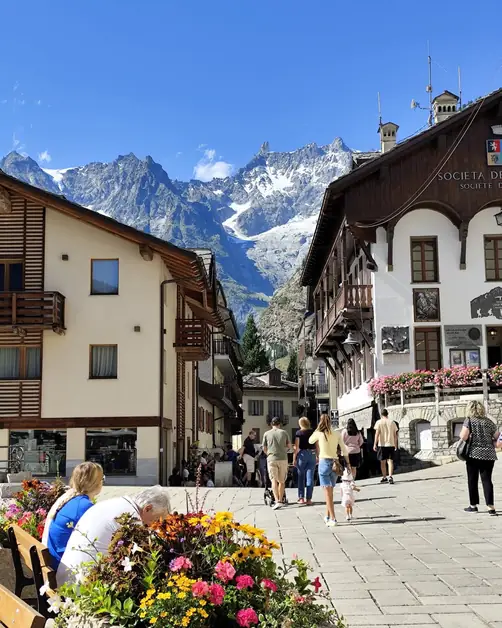
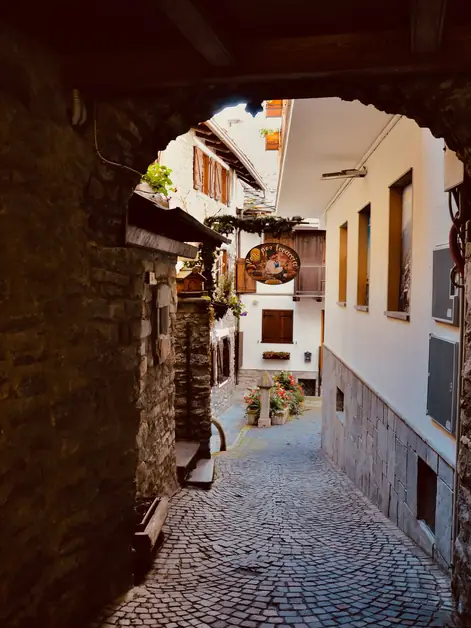
The historic center was our first stop. Courmayeur's historic center is quite small, mainly consisting of the long Via Roma that cuts through it from south to north. This makes it perfect for exploring on foot, allowing you to fully immerse yourself in the alpine atmosphere of the village.
Here's a tip: Courmayeur's Limited Traffic Zone (ZTL) is mainly active during the high summer and winter seasons, with specific hours (Monday-Friday 8-20, nights on weekends). This makes the center even more pleasant to visit on foot, free from car traffic.
The visit to Courmayeur's historic center starts at Piazza Abbè Henry. The main square is dedicated to the Italian priest, botanist, and mountaineer Joseph-Maria Henry, born in Courmayeur in 1870. The square stretches mainly alongside the Church of San Pantaleone and opens up in front of the local Alpine Museum.
From the square, you can enjoy a stunning view of the mountains surrounding the center, including the Mont Blanc massif and the impressive Mont Chétif. Stopping here for a moment, breathing the fresh mountain air, and admiring the scenery is completely free and one of the most memorable parts of the visit.
A dive into mountaineering history
I love history. My wife, not so much 😏. So I had to convince her to visit the Alpine Museum Duca degli Abruzzi. I read it opened in 1929 and houses a vast collection of photos, objects, and testimonies that let you trace the evolution of mountaineering. I didn't want to miss it! Here's what I saw inside: on the ground floor, the exhibit is dedicated to pioneers who guided explorers to high-altitude areas, some still unexplored. The rest of the museum features materials and images of expeditions worldwide, from Alaska to Africa, from K2 to the North Pole. This visit shows how central this town has been in the history of world mountaineering.
Via Roma: the beating heart of the town
Via Roma is full of shops and places where tourists can stop for a drink or a meal. It's the classic strolling street but in a mountain town. Walking along this pedestrian street, window shopping, observing the typical alpine architecture, and soaking in the lively atmosphere is a great experience.
During our walk along Via Roma, my wife and I stopped at Café Roma for a coffee break. I have to be honest: when we saw the menu, we immediately realized we were in the heart of a high-end mountain tourist spot. I ordered a simple coffee for 3 euros, while my wife chose a cappuccino that cost 5 euros. Looking at the rest of the menu, we noticed prices rise quickly: a coffee with cream goes up to 7 euros, hot chocolate with cream to 8 euros, and even a fruit juice costs 7 euros. Sure, the prices reflect the prime location right on the main street, but I suggest you carefully consider where to stop for breaks. We treated ourselves to that coffee break, knowing it would be one of the few "luxuries" of the weekend.
First day: exploring Dolonne and surroundings
On our first day in Courmayeur, my wife and I decided to make the most of the Blue Line to move between villages and ski lifts without using the car. In the morning, we went up to town and took the Blue Line from the stop in central Courmayeur towards Dolonne, getting off at the "Dolonne - Funivia" stop. From there, the cable car to the ski area departs, and you can easily reach the Alpine Pool and Courmayeur Sport Center.
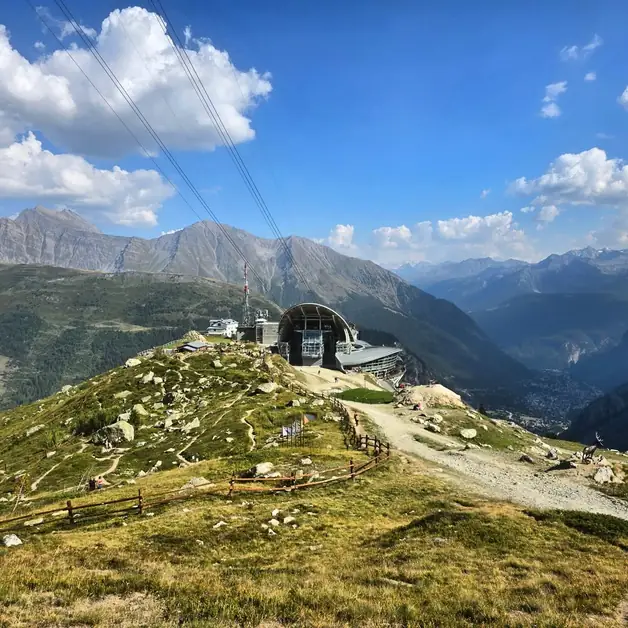
After spending a few hours walking, in the early afternoon, we took the same Blue Line from Dolonne to the "Skyway Monte Bianco" stop. This took us directly to the start of the famous panoramic cable car, letting us enjoy the setting at the foot of Mont Blanc. Even without going up, the base of the Skyway offers spectacular views, and the surrounding area is worth a long walk.
At the end of the day, still on the Blue Line, we returned to the town center, getting off again in Courmayeur for an evening stroll through the village streets. The evening lighting of the historic center creates a magical atmosphere, perfect for ending the day with dinner in one of the town's casual spots (which aren't entirely cheap).
Second day: discovering the valleys
We dedicated the second day to the side valleys using the Green and Red lines. In the morning, we left from central Courmayeur, taking the Green Line towards Val Ferret and getting off at the winter terminus at Foyer de Fond, a reference point for cross-country skiing. We took a long walk on the snow along the pedestrian path and stopped at one of the restaurants along the loop. The place has many charming refuges.
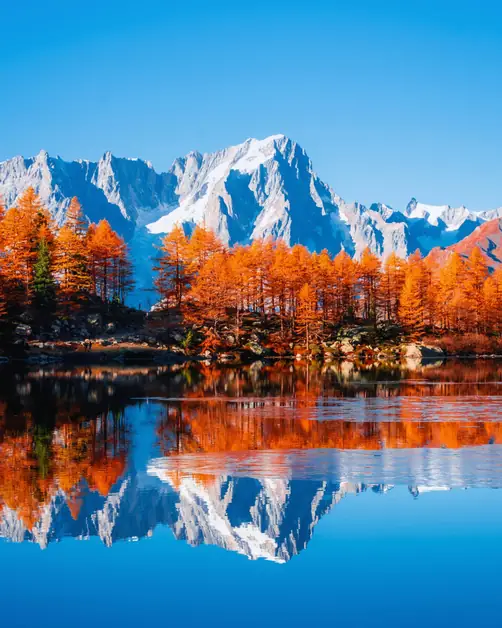
I must say, Val Ferret offers very beautiful views. Walking immersed in this alpine landscape, surrounded by the most iconic peaks of the Alps, is an experience that's priceless but paradoxically costs nothing.
In the afternoon, heading back towards Courmayeur on the Green Line, we got off in town and switched at the center, taking the Red Line towards the "Campo sportivo Val Ferret," the last stop of the line. There, we walked on the winter pedestrian loop overlooking Mont Blanc, the Dente del Gigante, and the Grandes Jorasses, before returning in the evening on the same Red Line to central Courmayeur, to end the weekend without ever having to use the car. A car we had parked conveniently!
Practical tips for saving money
The secret to enjoying Courmayeur without spending a fortune lies in smart planning. Use local public transport, focus on the natural beauties accessible for free, choose carefully where to eat by avoiding the most touristy restaurants, and book accommodation in advance. These strategies make a difference.
Courmayeur isn't just for those who can afford lavish luxury: with a bit of planning and a desire to discover even the less famous spots, this alpine gem becomes accessible to everyone. Our weekend showed that traveling on a budget doesn't mean missing out on beauty, but simply experiencing it more authentically and consciously.