Castello di Cly: Visit, Opening Hours and One of the Most Beautiful Views in the Aosta Valley
A medieval castle that once controlled the entire valley, opening hours and prices for a summer visit, and a few extra hours to explore the surrounding area.
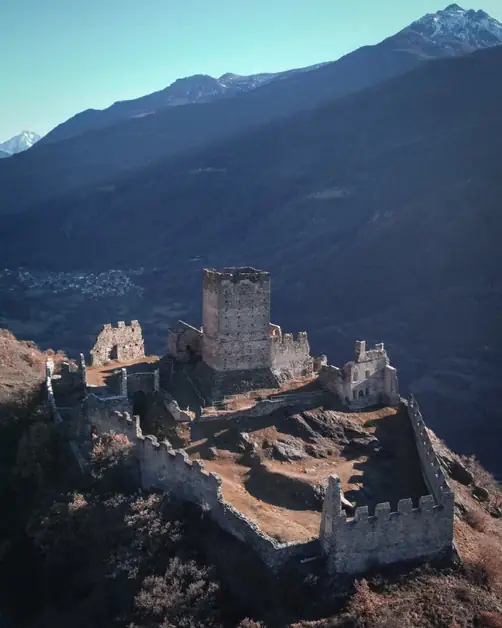
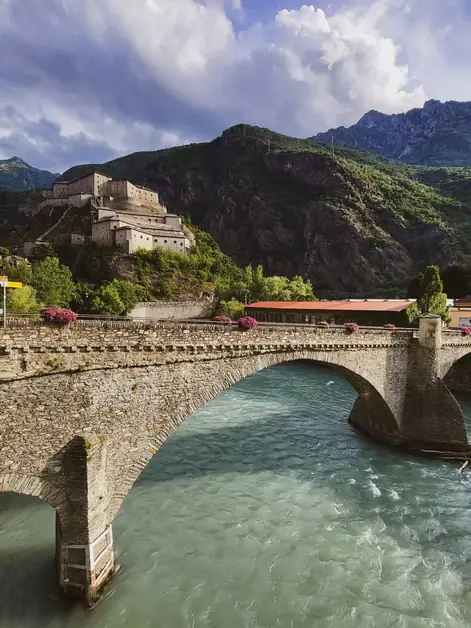
You can see that rocky spur with ruins from the valley. It's visible even before you know what it is. The Castle of Cly sits above Saint-Denis. Its position grabs your attention immediately, even before you climb up.
The castle is above Saint-Denis on a rocky spur. You can spot it easily from the highway or main road through the valley. From there, you see vineyards, valley towns, and the mountains framing the Aosta Valley landscape.
During its open season, you can visit with guided tours. The castle opens only in summer, from July 1 to August 31.
According to the schedule at the entrance, tours run Tuesday to Sunday. The castle is closed on Mondays. It's open from 10:00 to 12:30 and 14:30 to 18:00. The last morning tour starts at 12:00, and the afternoon one at 17:30.
A full ticket costs 2 euros. Groups over 20 people pay 1 euro each. Entry is free for children up to 12 and visitors over 65.
The castle visit is quick, but the area deserves more time. Around the fortress, you'll find ancient villages, Moscato di Chambave vineyards, historic trails, and Lignan village. Lignan is famous in the Aosta Valley for stargazing.
A castle built to control the valley
As you travel through the central valley, you can't miss the Castle of Cly. It's a type known as an enclosure castle: a large central tower protected by a wall that also enclosed a Romanesque chapel. A similar setup is found at the Castle of Graines.
The location was strategic. Built on a rocky hill above today's Chambave, the castle controlled the Strada delle Gallie. This was the main route through the Aosta Valley in medieval times. From here, they could watch over Chambave, Nus, Quart, and the access to Aosta. From nearby Colle San Pantaleone, control extended to Valtournenche.
In the Middle Ages, the powerful Challant family influenced the area. In 1212, the Savoy family granted the Challants the lordships of Châtillon and Cly, which then formed one district.
In the 1300s, the castle made headlines because of Bonifacio di Cly and his son Pietro. They were accused of attacking merchants and feudal lords traveling through the valley. The situation got so bad that the bailiff of Aosta and later Amadeus VI of Savoy, known as the Green Count, had to intervene.
The lordship then came under direct Savoy control. Over the following centuries, the castle lost importance and was abandoned. In the 17th century, parts of it were demolished to reuse materials for the palace of Marquis Pietro Filiberto Roncas in Chambave.
Today, what's left helps us understand what the Aosta Valley was before becoming a tourist spot: not a vacation place, but a strategic corridor to control. Anyone passing through--merchants, armies, pilgrims--did so under the watchful eyes of those above.