Civita di Bagnoregio, the charm of a car-free village
Crossing a pedestrian bridge suspended over the Valle dei Calanchi and strolling through narrow streets and past ancient houses, away from traffic. The story of our visit, from the parking lot to the entrance to the village
Lazio has much more to offer than its capital: medieval villages, natural landscapes, historic villas and traces of ancient civilizations. Civita di Bagnoregio, in the province of Viterbo, reminded us how much there is to see in this region beyond Roma.
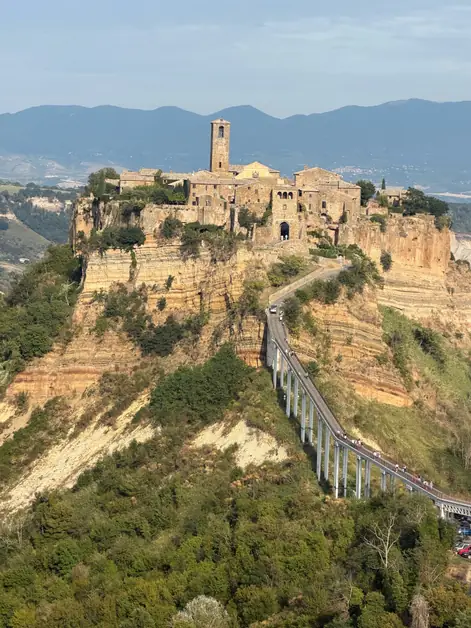
The first thing that struck us when we arrived was the village's setting: isolated on top of a rocky outcrop and connected to the surrounding area by a long pedestrian bridge. Before reaching it, though, you need to decide where to leave your car and how to continue.
During our visit, we used Parcheggio Battaglini in Bagnoregio. From there, you can walk to the bridge or take a shuttle to get closer.
How to reach the bridge from Parcheggio Battaglini
From the parking area, it's about a 1 km walk to the bridge. That isn't far, but the walk can be tiring in the sun, especially on summer days. You'll also need to factor in the return trip.
Alternatively, there's a shuttle advertised as departing every 20 minutes, with a round-trip ticket costing 2 euros. It doesn't take you right to the entrance to Civita, so you'll still have some walking to do.
There are also public toilets at Parcheggio Battaglini, costing 2 euros. Frankly, that seems rather steep to us for using a public toilet.
Once you reach the bridge, the view is striking. Civita sits atop its rocky outcrop, surrounded by the Valle dei Calanchi and its deep gullies carved into the earth.
The pedestrian bridge is about 300 meters long and climbs on the final stretch before you enter the village. Crossing it is probably the most memorable part of arriving: as you get closer, the houses and walls seem to rise straight out of the rock.
To enter Civita di Bagnoregio, you need to buy a 5-euro ticket. We have some reservations about this, too: charging admission to an inhabited village is debatable, especially when one of the best parts of the visit is the view of Civita from outside, with the bridge suspended above the valley.
Allow about 30-60 minutes to walk from the parking area, cross the bridge and return, plus whatever time you need to explore the historic center.
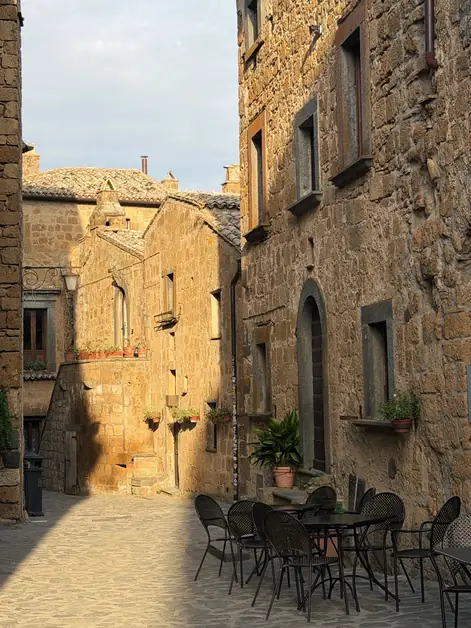
Visiting Civita also feels like stepping back in time, as you wander through narrow lanes past old houses without the noise of cars. Perhaps that's the best part of the visit: experiencing, even for just a few hours, the atmosphere of a small village that seems to belong to another era. It's a different experience from visiting Roma, where the grandeur of its historic heritage inevitably comes with the traffic and pace of a metropolis.