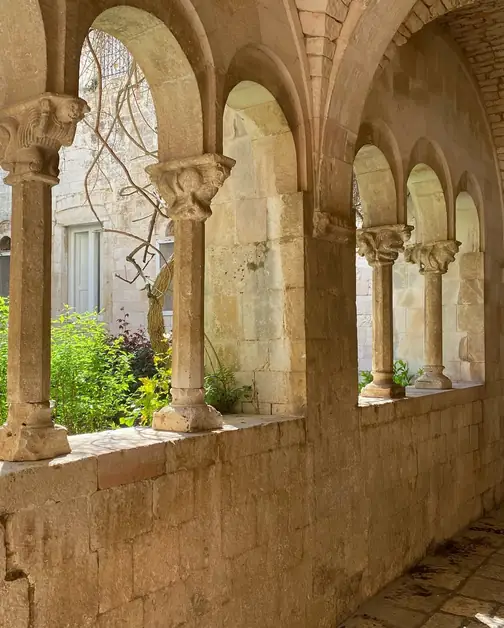
Cathedral of Conversano
The Cathedral of Conversano is an example of Pugliese Romanesque architecture, rich in history and art.
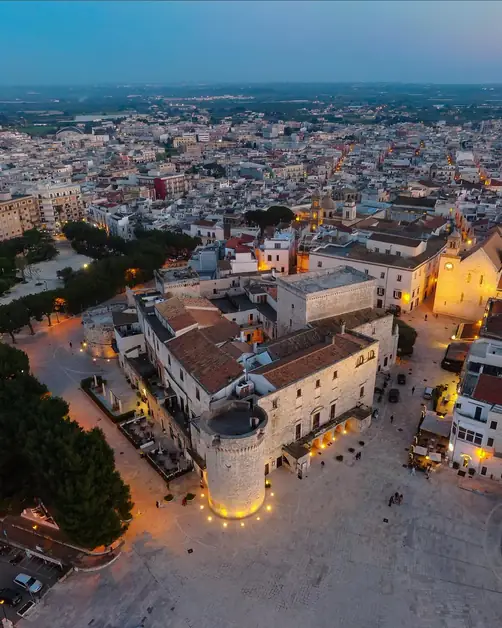
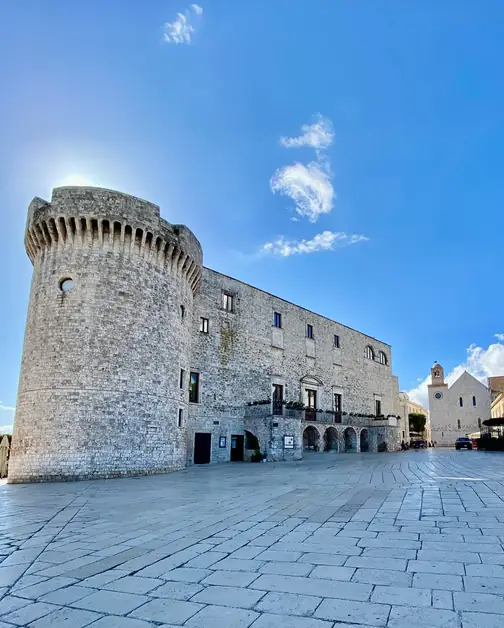
If you arrive in Conversano from the castle, walking down the white streets, you'll suddenly see it: imposing, compact, built from light limestone that seems to absorb sunlight. It's the Basilica Cathedral of Santa Maria Assunta, one of the most important Romanesque monuments in Puglia.
I chose Conversano for a practical reason: I needed a place to stay nearby. Both Monopoli and Polignano were pricier at that time. Conversano was cheaper, quieter, and centrally located between the sea and inland. It was a smart choice: less tourist inflation, more breathing room, and a chance to explore a charming historic center many overlook.
Its origins date back to the late 11th century, during the Norman era, likely under Geoffrey of Hauteville. The main structure was completed between 1359 and 1374, thanks to Bishop Pietro d'Itri. This church carries centuries on its back: it's not perfect, not "cleaned up" like some northern cathedrals, but it's solid, rooted, Mediterranean.
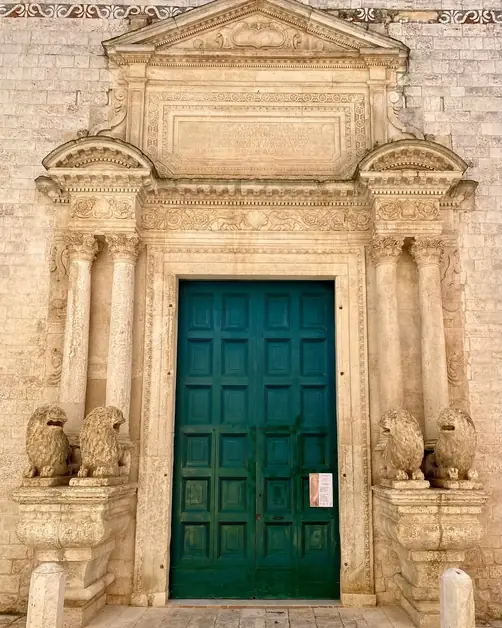
The facade is stern, almost austere. Clean lines, few decorative concessions, and a large rose window dominate the view. Then, as you approach the main portal, everything changes: the Renaissance entrance is richer, sculpted, full of details. On the sides, four stylophore lions support the columns. These are typically medieval figures, a bit rigid, a bit fierce, with a mix of Norman, Byzantine, and Arab influences that naturally blend in Puglia. You can't help but stop and look at them. It's a pity the cathedral is somewhat suffocated by surrounding buildings: the space in front doesn't do it full justice, and you almost have to find the right angle to appreciate its compact mass.
Inside, the atmosphere is different. Three naves, sturdy columns, round arches, and double side matronea - those balconies above the naves had specific functions in Puglian churches, related to social and liturgical divisions. The rose window is clearly visible from inside, casting a soft light on the pale stones. Despite being entirely built from local stone, it's not bare at all: the proportions, volumes, and architectural details give it warmth and character. The wooden truss ceiling remains simple, almost essential. During the peak summer hours, the effect is surprising: outside it's 35°C, inside there's a cool calm that slows your pace.
It's not just a "beautiful" church. It invites silence.
Things to look at closely:
The 14th-century wooden Crucifix, very expressive, almost dramatic.
The icon of Madonna della Fonte, a local devotion site.
Traces of frescoes in the left apse: not perfect, not fully preserved, but fascinating for surviving humidity, earthquakes, and restorations.
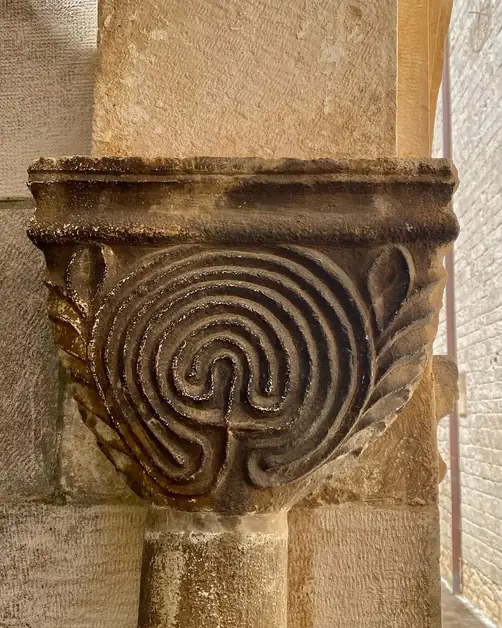
The north side portal, with medieval sculptures telling stories few can read today.
The cathedral's history is complex. It faced earthquakes, major renovations in the 1950s and 60s, and more recent restorations. Some call it "unclassifiable" due to these layers. But maybe that's its strength: it's not a frozen monument. It's a building that adapted over centuries without losing its identity.
Located in Piazza della Conciliazione (many call it Piazza Duomo).
Entrance is free.
Hours follow liturgical celebrations: avoid mass times for a calm visit.
Wear comfortable shoes for the historic center, and show respect: it's a living place of worship, not a photo set.
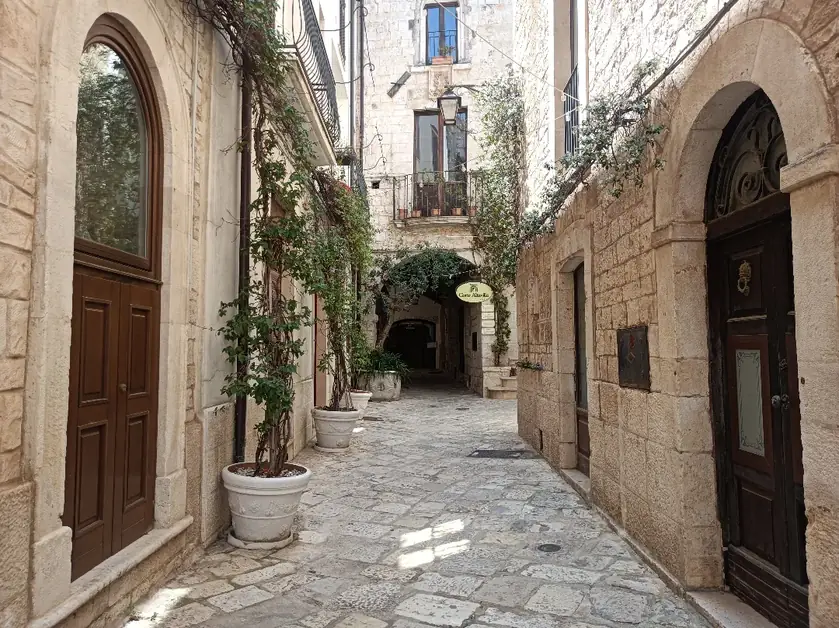
If you pass through Conversano, spend at least 20-30 minutes here, without rushing. Then step out, turn the corner, and you're near the castle or in the village alleys.
It's one of those places where you realize how deeply Puglia is still tied to its Middle Ages: not as a tourist reconstruction, but as a quiet part of daily life.