Bari Vecchia: History and Authenticity
Bari Vecchia is a labyrinth of history and authenticity, where every corner tells centuries of tradition. Historical monuments and daily life intertwine in a unique atmosphere.
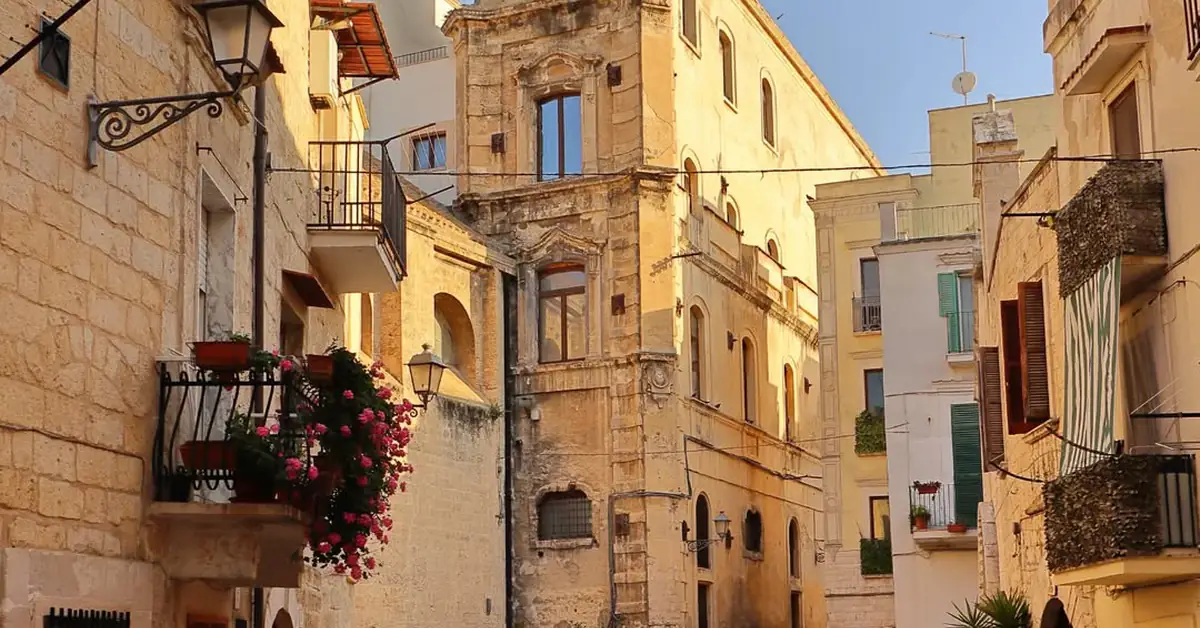
The historic center of Bari, known as "Bari Vecchia," is the most authentic part of Bari. The modern buildings in the new city are neat and functional. But you could find them in many other Italian cities. Not here. Here, there's a unique identity that you won't find elsewhere.
Bari Vecchia holds the relics of Saint Nicholas, one of the most revered saints worldwide. Today, it's the vibrant heart of cultural activities for visitors.
The old part of the city is a maze of narrow streets, arches, and small squares. It's similar to what I found in Ostuni. But what makes it special here is its view of the sea. Bari Vecchia isn't closed off; it opens directly onto the Adriatic!
Besides the many churches in the old town, the ancient part offers symbolic monuments, sea views, medieval history, and a culinary tradition that's integral to the visit.
The first place to start is definitely the Basilica of Saint Nicholas. It's a major pilgrimage site because it holds the saint's relics. The Basilica is dedicated to him and is famous worldwide. It's perhaps the most renowned among the twenty-five churches in the old town. It's open continuously from 7 AM to 10 PM. Visitors from all over can admire its Romanesque-Pugliese architecture and its ecumenical nature. Both Catholic and Greek Orthodox rites are celebrated here. Before entering, it's worth stopping in the square to admire its simple majesty. It was redesigned around 1100 on the remains of the Catapano Palace.
Inside, admission is free. You can discover stories about Saint Nicholas, bishop of Myra around 300 AD. Learn about the relics' transfer in 1087 by sixty-two sailors from Bari and the Holy Manna ritual. The patronal festival in May is a deeply felt event. It fully reflects the strong bond between Bari and its saint.
At the edge of the old city stands the Norman-Swabian Castle, a symbol of Bari. It was first built in 1133 by Roger II. Over time, its structure and function changed. Today, it features Norman towers, strong Angevin walls, and a large moat leading inside. You can visit the museum areas with an 8 euro ticket. This ticket also includes access to part of the so-called underground Bari.
Equally important is the Cathedral of San Sabino, consecrated in 1292 and rebuilt after the city's destruction in 1156. It showcases the Romanesque-Pugliese style. Outside, you'll see the bell tower, central rose window, and statues of the Madonna dell'Odegitria with San Sabino and San Nicola. Entry is free, letting you admire the matronea, pulpit, ciborium, and the impressive crypt. This completes a journey through the authentic soul of Bari Vecchia.
Of course, Bari Vecchia isn't just churches and monuments. Its alleys are filled with restaurants, trattorias, pizzerias, and small bakeries. I recommend trying Maria delle Sgagliozze's sgagliozze. These are simple fried polenta squares, served hot, capturing the area's genuine spirit.
How to get to Bari Vecchia
Bari is a major port, airport, and rail hub in Southern Italy. So, it's easy to reach by any means. The port is close to the old town. If you arrive by cruise or ferry, you can walk to Bari Vecchia in about 15 minutes. Alternatively, take the public bus line 50 (1.50 euros). It stops near the Castle and takes you directly into the historic center. Taxis, car rentals, and even the Velostation with bikes and scooters are available.
From the Karol Wojtyla airport, connections are frequent and convenient. The Ferrovie Nord Barese train takes you to the central station in about 20 minutes (around 5 euros). The AMTAB bus line 16 is cheaper but slower. Private shuttles and taxis also reach the city center in about 30 minutes.
From the train station on Piazza Aldo Moro, you can walk via Sparano and through the Murat district. This 20-minute walk shows two different sides of the city. Alternatively, use line 50 or a taxi. If driving, choose "park & ride" lots, which are cheap and well-connected to the center. Avoid resident-only areas to prevent fines.