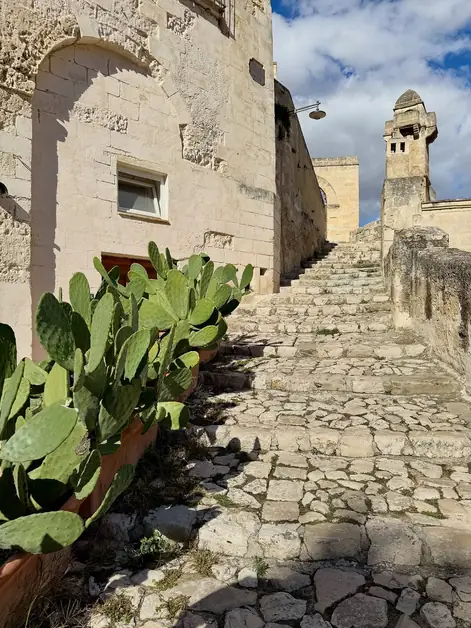
Visit the Cripta del Peccato Originale in Matera
The Cripta del Peccato Originale is an artistic jewel in Matera with unique frescoes and a fascinating history.
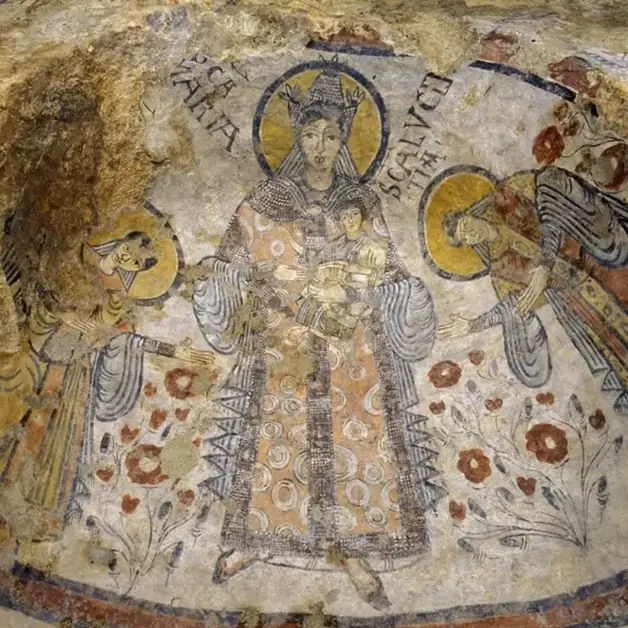
The Cripta del Peccato Originale is a unique and fascinating place to visit near Matera, famous for its extraordinary rock frescoes. It is located in contrada San Giuliano, embedded in a tuff wall along one of the bends of the Gravina stream, just before reaching the Bradano river.
This site is easily accessible from the Strada Statale 7, heading towards the small village of Miglionico. Along the way, you can admire numerous cenobites, villages, and rock settlements that testify to the historical and cultural importance of the area.
Why is the Cripta del Peccato Originale also called the Cripta dei Cento Santi or Church of the Painter of Flowers?
The Cripta del Peccato Originale is also known as the Cripta dei Cento Santi due to the presence of numerous frescoes depicting saints that decorate its interior walls.
Another name by which it is called is the Church of the Painter of Flowers. This nickname derives from the beautiful red flowers, called cistus, painted at the feet of the frescoes. Cistus are typical flowers of the Murgia plateau that live only one day, symbolizing the fleeting nature of earthly life and the ongoing search for immortality.
How was the Cripta del Peccato Originale discovered?
The crypt was discovered by chance by some shepherds of the Matera countryside. Today it represents one of the most precious jewels of rock art in Southern Italy, attracting visitors from all over the world interested in history, religion, and ancient art.
What are the characteristics of the interiors of the Cripta del Peccato Originale?
The internal structure is divided into three niches arranged on the left wall. The true artistic and historical value of the complex lies in the pictorial cycle of the side walls, created using the fresco technique.
The frescoes date back to a period between the 8th and 10th centuries AD and can be divided into two main phases.
What images are depicted in the frescoes of the Cripta del Peccato Originale?
In the first phase, the back walls feature images that narrate scenes from the Old and New Testaments.
In the second phase, on the side wall, the triarch of archangels – Michael, Raphael, and Gabriel – along with saints Peter, John, and Andrew are represented.
At the center of the main niche is depicted a Madonna in royal attire, recalling the Byzantine theme of Deesis, a typical representation of veneration.
What are the most particular and symbolic scenes present in the frescoes of the Crypt?
One of the most significant images is found on the back wall: a deacon pours water into the hands of a bishop, while to the right the Genesis is represented in three different moments.
The first scene shows the Lord creating light, the second the Darkness, and the third the creation of man and woman, with Eve emerging from Adam's rib.
Next to these figures, on the left, the Tree of Evil is painted with a serpent coiled around its trunk. Eve offers the forbidden fruit to Adam, but here the peculiarity is that the fruit is not an apple, as commonly represented, but a fig.
What is the significance of the fig in the frescoes of the Cripta del Peccato Originale?
According to Christian tradition and what is written in the Old Testament, after eating the forbidden fruit, Adam and Eve realized they were naked and covered themselves with fig leaves.
Thus, historically, the fruit of original sin should be represented as a fig and not as an apple.
The apple has become a symbol of sin and evil over time, probably for cultural reasons and easy association. In Latin, in fact, “apple” translates to “malum,” which also means “evil,” making this fruit a more immediate and recognizable symbol in Europe, especially in northern regions.
How many churches in Italy represent original sin with the fig as a symbol of evil?
The representation of original sin with the fig is very rare and can be found in only five churches in Italy, including the famous Sistine Chapel in the Vatican.
The Cripta del Peccato Originale is considered the oldest of these artistic testimonies.
Why is the Crypt sometimes mistakenly called the Church of Evil?
Some people call the Cripta del Peccato Originale the “Church of Evil” due to the presence of the Tree of Evil and the scene of original sin depicted there.
In reality, this name is a mistake: the crypt is a sacred place, rich in faith and art, telling biblical and symbolic stories, and has nothing to do with evil in a negative sense.
How can I book a visit to the Cripta del Peccato Originale?
Visiting the Cripta del Peccato Originale is only possible by mandatory reservation. To access, it is necessary to purchase a ticket and check the opening hours, which may vary throughout the year.
Remember to inform yourself in advance about the booking methods, so you can best organize your visit.
What are the best ways to reach the Cripta del Peccato Originale?
If you are not familiar with the area, we recommend using digital maps to reach the Cripta del Peccato Originale.
A useful landmark is the Azienda Agricola Dragone: once you arrive there, proceed for a few dozen meters and you will find the entrance to the crypt.
It is important to plan the route in advance to avoid difficulties along the way.
What additional services may be useful for visiting the Cripta del Peccato Originale?
If you prefer, you can look for a transfer or shuttle service that takes you directly to the Cripta del Peccato Originale, thus avoiding problems with parking or local traffic.
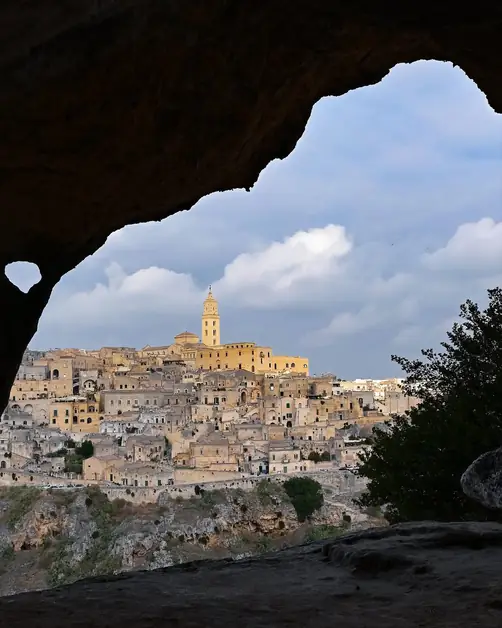
Additionally, if you are interested, you can discover other artistic and natural beauties of Matera and its surroundings, such as other rock chapels and historical sites.
Where can I find other interesting attractions near the Cripta del Peccato Originale?
In the vicinity of Matera, there are numerous other rock chapels and historical settlements worth visiting.
The Gravina area and the surrounding territory offer unique landscapes, ancient churches carved into the rock, and testimonies of millennia-old cultures.
Check with local tourist offices or specialized guides to discover personalized itineraries and delve into the history of these extraordinary places.