Necropolis of Torre Guaceto: Where It Is Located and How to Visit It
Discover where the Necropolis of Torre Guaceto is located, how to visit it and what the archaeological excavations have revealed.
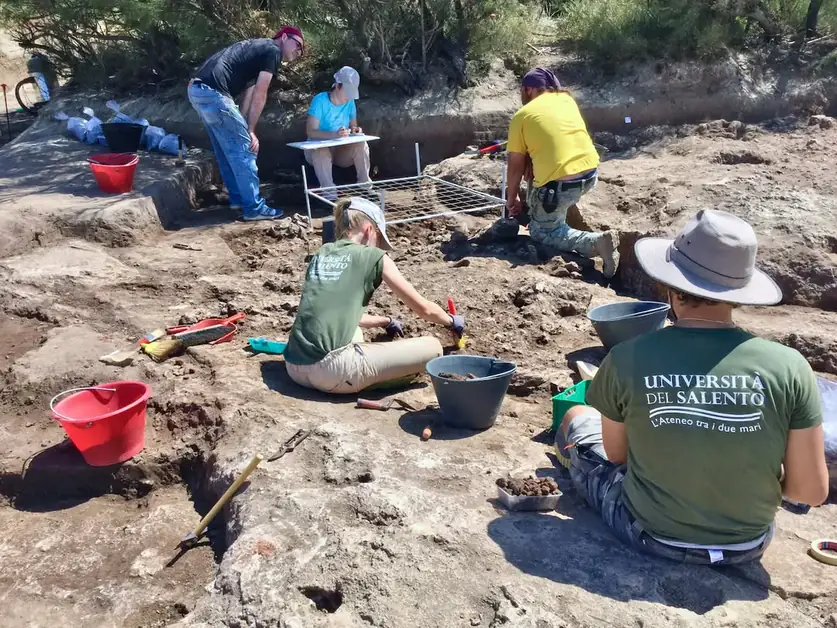
Inside the Torre Guaceto Nature ReserveTorre Guaceto Nature Reserve, there's a major archaeological find. It's a Bronze Age necropolis discovered along the coast in Puglia.
The Necropolis is located between the beach of Conchiglie and the third cove.
You can't drive there. After parking at the reserve, walk across the beach and follow the trails.
You can visit only with organized guided tours by the reserve management. You need to book in advance.
Tours usually happen in spring and summer. The reserve updates the schedule regularly. The activity lasts about 3 hours and is paid.
In summer, tours are often on Friday mornings. They are part of archaeological and nature guided tours. Spots are limited.
No, the tombs aren't fully visible. To protect this valuable archaeological heritage from foot traffic and weather, the Management Consortium and the University of Salento don't leave the excavations permanently exposed. The urns and other artifacts are uncovered only during excavation campaigns. Then they're documented, protected, and reburied to ensure preservation.
To learn more about the findings, it's best to visit the Al Gawsit Visitor Center. There, some artifacts and a Bronze Age village reconstruction are displayed. The artifacts found during excavations, which uncovered over 130 burials, are kept in archaeological museums. They're not visible along the reserve's visitor path.
The excavations are conducted by the University of Salento and the Soprintendenza. They've uncovered a large burial area from the late Bronze Age (13th-12th century BC). It was used by a community living on this coast over three thousand years ago.
Research is ongoing and constantly leads to new discoveries.
The 2026 excavation campaign confirmed 131 burials, thanks to the discovery of over twenty more tombs. Many still have urns placed in rock pits. In some cases, fragments of the bowls covering them remain.
Beside the tombs, archaeologists found grave goods, bronze pins, and vessels with fermented cereal drink residues.
If your main interest is the sea, the necropolis alone isn't a reason to visit the reserve.
But if you love combining nature, history, and archaeology, the visit offers a completely new perspective on the protected area.
For those visiting Torre Guaceto, the necropolis enriches the reserve excursion. It's not just a day among dunes and Mediterranean scrub, but also a chance to learn about an important archaeological site that emerged in recent years along the Apulian Adriatic coast.