The magic of the Festa della Bruna in Matera
The Festa della Bruna in Matera is a unique event that combines tradition, faith, and culture, with processions and rituals that engage the city and tourists.
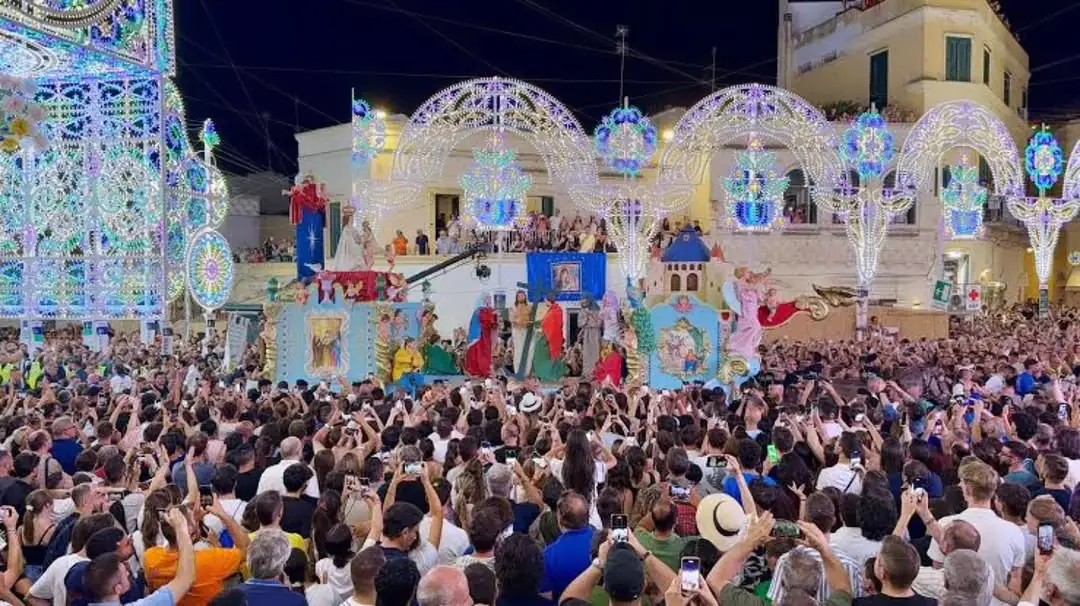
On July 2nd, Matera hosts one of the most intense and evocative days of the year for the city and for tourists wishing to experience a unique cultural and religious event. This day is dedicated to the feast of the Madonna della Bruna, the patroness of Matera, and is characterized by a series of rituals and processions that take place from dawn until nightfall.
Following the entire program of the feast is a real challenge, even for those used to complex events, as there are numerous appointments that often overlap. Among them, three main processions stand out, marking the rhythm of the day and telling the story, traditions, and deep significance of this celebration.
What is the significance of the shepherds' procession during the Festa della Bruna in Matera?
The first procession on July 2nd begins very early, at the first light of dawn, around 4:30 AM. At this moment, still shrouded in darkness, a long line of people moves from the cathedral of Matera to Piazza San Francesco, illuminated by the candles carried by the participants.
Here, the first mass of the day is celebrated on the steps of the church. At the end of the service, a powerful sound signal, the launch of bombs on the Murgia Timone, awakens the entire city and announces the official start of the feast.
This procession is known as the “Diana” and has ancient roots linked to agro-pastoral culture. According to oral traditions, it was introduced by the Confraternity of Shepherds, a group formed in 1698 tasked with assisting shepherds, people engaged year-round in caring for livestock who could not abandon their work even on this important day.
During the shepherds' procession, an image of the Madonna della Bruna, painted on a sheet of copper by an unknown artist, is carried. This image is followed by a multitude of faithful, especially young people, who run and celebrate by launching firecrackers and whistles similar to those used by shepherds to call their sheep.
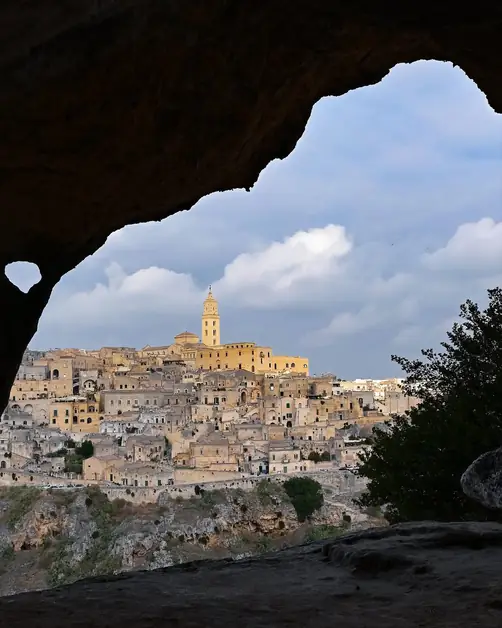
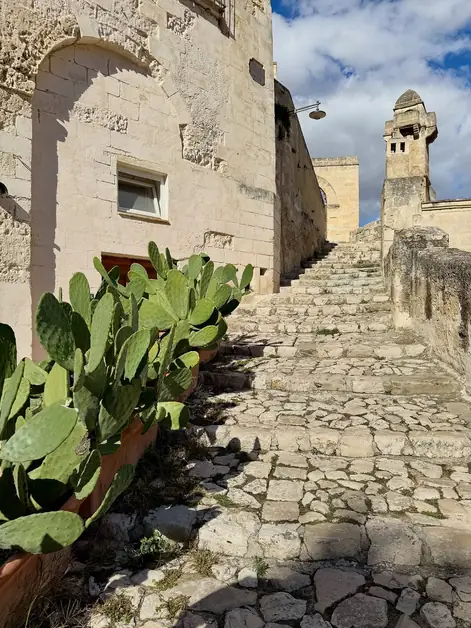
The procession winds through the narrow streets and staircases of the Sassi of Matera, stopping several times for brief moments of prayer, until it reaches the church of San Francesco da Paola, where a second mass is celebrated. Finally, the procession returns to the cathedral, from where it started.
What does the shepherds' procession represent and how is it connected to transhumance?
The shepherds' procession is much more than a simple religious celebration: it recalls the ancient practice of transhumance, that is, the seasonal movement of livestock from the plains to the mountains and vice versa, along traditional routes called tratturi.
The prayer stops along the route recall the stages of this migration, often associated with places of worship where shepherds and farmers would meet to work wool, prepare dairy products, or trade. This tradition is also alive in other areas of Basilicata, such as Viggiano, where the patron Madonna is taken from the sanctuary to the mountain and vice versa during particular festivities.
How does the procession to the cart take place and what is its significance in the Festa della Bruna?
Around midday, after the solemn pontifical mass, the second procession takes place, very scenic and rich in symbolism. The procession departs from the cathedral and heads towards the parish church of the Piccianello district, near the factory where the triumphal cart is built.
In this procession, one can admire the Knights of Bruna in traditional costumes and vintage carriages, including the one carrying the image of the Madonna della Bruna. Another important element is the figure of the archbishop, who carries the image of the Baby Jesus on a small throne separate from that of the Madonna.
This gesture has a deep significance related to the feast of the Visitation of Mary to Elizabeth, as narrated in the Gospel of Luke. Mary, in fact, went to visit her cousin Elizabeth while carrying Jesus in her womb, still unseen to the world. During the procession, the Baby Jesus is then removed from the Madonna's arm to represent this moment when the Savior was “invisible” in the maternal womb.
The Madonna, depicted as if departing from Nazareth, moves towards the cart factory, symbolizing the place where Elizabeth lived. The two images remain separate in the church of Piccianello waiting to be taken in the afternoon to the cart.
What is the ritual of the evening procession and what are the “three turns” of the Madonna della Bruna?
In the afternoon of July 2nd, one witnesses a very important ritual moment that prepares for the evening procession. The separate images of the Madonna and the Baby Jesus are taken from the church of Piccianello and brought near the papier-mâché cart, which has been painstakingly built over six months.
The statue of the Madonna is made to pass through a small door in the back tower of the cart, while the Baby Jesus is once again fixed to her left arm. Then, with the help of a manual elevator, the Madonna with the Child emerges atop the cart, visible to all.
This moment is rich in meaning: it represents the union between the divine and the human, the maternity celebrated with joy, and the triumph of life and nature that renews itself every year. The grains of wheat collected shortly before the feast symbolize this rebirth.
When the cart is ready, it is dragged to Piazza Marconi and, at sunset, the procession begins, pulled by mules and accompanied by the marching band, authorities, and knights in costume. The procession proceeds slowly, with frequent prayer stops, until it reaches Piazza Duomo.
Here, the Madonna della Bruna, still on the cart, makes three turns around the square, a gesture full of symbolism that invokes protection over the city. This ritual act is similar to a state of waiting and tension, a prelude to what will happen next.
What happens during the destruction of the cart of Bruna in Matera?
The destruction of the cart is the climax and most exciting moment of the Festa della Bruna. After removing the sacred image of the Madonna from the top, the cart begins its backward journey towards Piazza Vittorio Veneto, defended by the Angels of the cart and law enforcement to prevent early assaults.
The energy grows among the crowd, ready to challenge each other to dismantle and conquer the most beautiful and decorated parts of the work, the result of months of artisanal labor. In a few minutes, the cart is literally assaulted and dismembered, leaving only the bare wooden structure.
This rite symbolizes death and rebirth, the destruction of matter that allows for the birth of something new and more beautiful. The parts of the cart collected by the faithful become relics to be carefully kept, carrying on the tradition and energy of the rite.
What events conclude the Festa della Bruna on the night between July 2nd and 3rd?
After the destruction of the cart, a “bomb” announces the start of the fireworks show on the Murgia, one of the panoramic areas around Matera. The fireworks illuminate the night sky with vibrant and sparkling colors, creating a breathtaking spectacle.
The streets gradually empty, and the city prepares to celebrate the Materan New Year, which begins in the early hours of July 3rd, marking the end of an intense and emotion-filled feast.
How to best experience the Festa della Bruna in Matera as a tourist?
Participating in the Festa della Bruna means immersing oneself in a tradition that unites faith, art, history, and popular culture. For those visiting Matera on this occasion, it is important to arrive prepared, considering that the program is packed and events take place at different times throughout the day.
We recommend getting up early to witness the shepherds' procession and to follow at least one of the other two main processions to understand the complexity and beauty of this feast.
Walking through the streets of the Sassi, observing the passionate participation of the people, listening to the sounds of the bands and firecrackers, and not missing the final spectacle of the cart and fireworks are experiences that remain in the hearts of all.
Moreover, seizing the opportunity to discover the history and legends related to the Madonna della Bruna enriches the visit and allows one to see Matera with new eyes, between sacred and profane, tradition and modernity.