Discover the Brindisi Cathedral
The Brindisi Cathedral is an architectural gem that tells centuries of history and spirituality, an unmissable place for every visitor.
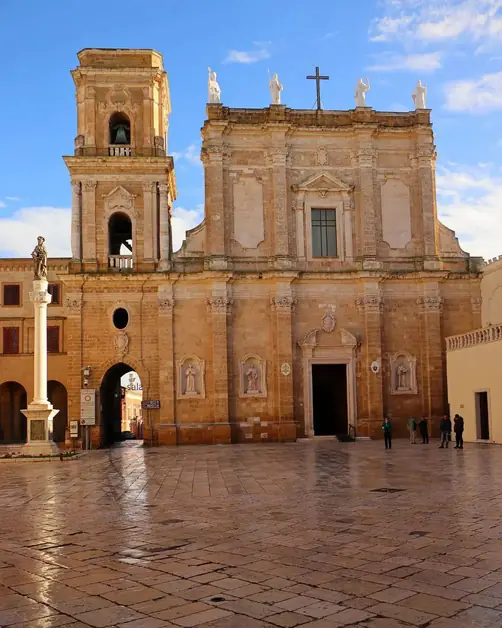
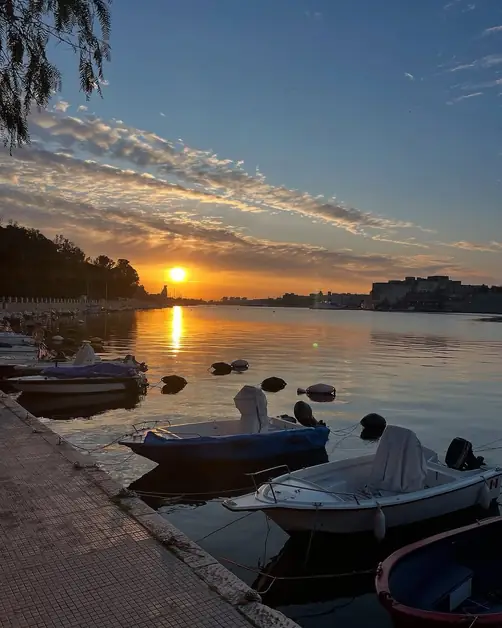
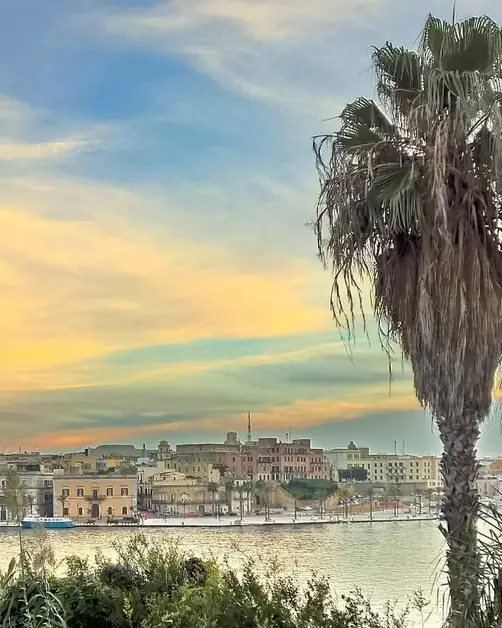
From the Brindisi waterfront, you start to sense something special. I walked along the port, stopped at the Faldetta Museum, then took the Virgilian staircase. From there, a small street led me straight to the Cathedral.
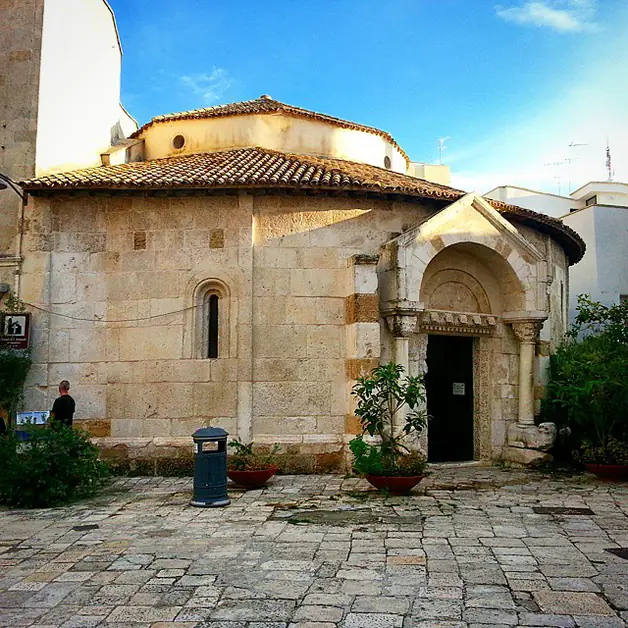
I didn't expect it like this. The square opens up suddenly, and the first thing you notice isn't the church--it's the light. The local white stone pavement reflects the sun almost annoyingly. The golden carparo buildings around seem to absorb and return it warmly and evenly. The square features the Basilica Cathedral, the Bishop's Palace, the Seminary, the Ribezzo Archaeological Museum with the Knights Templar Portico and the Balsamo Loggia, dating back to the 1300s. Similar materials, different eras--yet nothing clashes.
The Cathedral is dedicated to Saint John the Baptist. Pope Urban II consecrated it in 1089, and it was completed by 1143. It's near the port, which is significant. It was the gathering point for crusaders before heading to the Holy Land. As you walk around or enter, you don't realize this immediately. You understand later, when you start reading the plaques or looking down.
Inside, there are so many things. You end up following just a few without realizing it. Ruggero of Sicily was crowned king here in 1191. He was the first Norman to be crowned outside Palermo. In 1225, Frederick II, thirty-one and already widowed, married thirteen-year-old Isabella of Brienne in this same space. The original floor, made in 1178, was a mosaic with Old Testament scenes, mythological figures, and episodes from the Chanson de Roland. These were chosen for the crusaders preparing to leave. Some fragments remain in the left nave and around the main altar. The canon choir, carved in walnut, is a 16th-century work by local artisans. In the Cappellone del Santissimo Sacramento, the relics of Saint Theodore, the city's patron, are kept.
Little of the original Romanesque remains. The 1743 earthquake forced almost everything to be rebuilt. Allied bombings in World War II did the rest to the bell tower, which was later rebuilt on the old model.
But Piazza Duomo is not just a daytime spot. In the evening, you find yourself passing by almost by accident. It's easy to see why. The historic center comes alive here: restaurants, pubs, the theater, and a good concentration of B&Bs make it close to the city's nightlife area. I stayed on Via dei Templari, just a few steps away. More than once, I found myself under these arches without really planning it.
A place you seek by day and that finds you at night.