Complete guide to visiting the Ricetto di Candelo
Find out how long to dedicate to visiting the Ricetto di Candelo
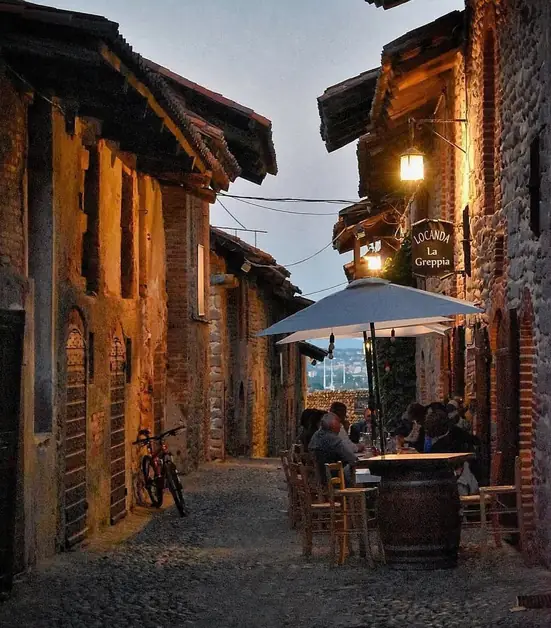
My wife and I were traveling by camper in Piedmont, without a specific destination. "Why don't we stop at Candelo?" she suggested, flipping through the guidebook. "There's this medieval 'ricetto' that looks interesting." We liked the idea, especially since the village is part of Italy's Most Beautiful Villages. So, there had to be something nice to see.
Actually, our main goal for the day was Biella. We planned to have dinner there and wanted to explore the area a bit. Candelo is just a few kilometers from the city, so it seemed perfect for a quick stop. "Since we're nearby," my wife said, "it's worth a visit before dinner."
We arrived and parked in the camper area. Unfortunately, it lacks electricity and waste disposal, so you need to plan if staying longer. It's not the most convenient, but fine for a few hours.
The Ricetto of Candelo is a group of fortified buildings from the 13th and 14th centuries, surrounded by herringbone cobblestone walls. They call it the medieval Pompeii of Biella. Maybe that's a bit exaggerated, but it does have historical charm. Locals built it to store agricultural products, and during wars, it served as a refuge.
After passing the gate tower with its large arch, you enter the square where the Palazzo del Principe stands. Sebastiano Ferrero built it in 1496. It's actually a transformation of existing cellars into a sort of tower. Not spectacular, but still interesting to see.
The streets are called "rue," a French term, and are made with sloped cobblestones to drain water from south to north. Two-story buildings line these streets. The ground floor was used as a stable or cellar, while the upper floor, called solarium, was for drying grains. Wooden balconies provide a distinctive touch to the place.
There's also the Ecomuseum of Viticulture for those interested in local farming and wine culture. We visited it quickly. It's nice but nothing exceptional.
From the ricetto, you can reach the Church of Santa Maria. It has a Romanesque facade made of river stone in a herringbone pattern. Inside, there are frescoes and artistic capitals.
Entry is free, which is a plus. Only during events might you need a ticket. We visited during the Christmas market and paid 6 euros each, so 12 euros total.
The stands varied: food, crafts, handmade items. Some were really nice, others more touristy. There were places to eat and public restrooms, which is convenient. During Christmas, the village becomes kid-friendly with Santa's village and activities for children.
It's definitely one of the best-organized Christmas markets I've seen. But the ricetto is worth visiting even outside events, when it's less crowded and you can explore more calmly. The village is small, you can see it in a few hours. If you're nearby, it's worth a visit. Just plan well if you're coming by camper, as the parking area is quite basic.
After visiting the ricetto, we headed to Biella for dinner at Menabrea. The village took a few hours, just enough time before enjoying the evening in the city. If you're in the area, the Candelo-Biella combo works well: cultural stop in the afternoon, then city dining and relaxing. Just remember, if you're in a camper, Candelo's parking is basic, so plan accordingly.