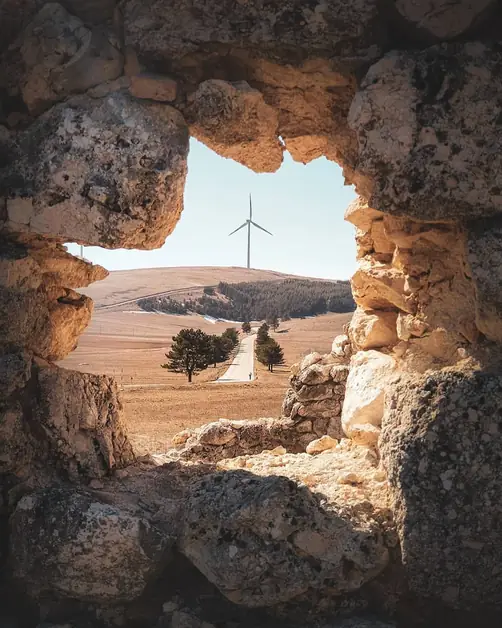
Collarmele: when time takes a different rhythm
A small village off the tourist circuits, where time changes pace and brings you back to a more natural rhythm.
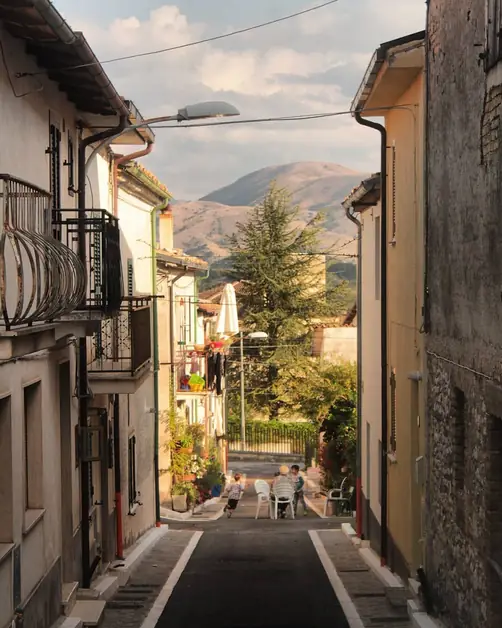
Collarmele isn't a place where you go to do things. It's a place where you go to just be.
When you arrive, you might feel a bit lost. If you come by train, you're probably the only one getting off at the station. You wonder what to do. Then you realize there's a better question to ask.
You're not there to do. You're there to slow down.
In the morning, you go out, and even without a plan, it's lovely. You can take a walk nearby, stroll on trails towards Sirente-Velino, or just stay in the village.
But if you feel like moving more, the best way to understand this place is to start walking.
For example, I started from Collarmele for a long trek to Forca Caruso. It's a challenging trek: you climb gradually, pass through forests and open areas, with views that constantly change. At some point, you leave the forest, and the landscape opens up: fewer trees, more wind, more light.
You start with the idea of reaching the top, and it seems tough. But the walk is enjoyable: the path flows, alternating forest and open spaces keep you going without thinking about the effort. You're far from noise, with only space and silence ahead. Without realizing it, the effort lessens. You find yourself regaining balance, taking care of yourself.
When you reach the top, at Forca Caruso, you feel rewarded for your effort. You're at 1,107 meters, between Sirente and the Fucino plain, with wide, open views of the Valle Subequana and the Peligna valley. The curves are gentle, the landscape is typical of the Apennines: silence, space, nothing really disturbs your view. In the distance, you can also see the masonry railway viaduct, adding a touch of romance.
It's a pass, a kind of crossing between two sides: road, few buildings, and only mountains around. For centuries, people, animals, and trade moved through here between inner Abruzzo and Marsica: it's not just a geographic point, it's a real passage, used forever.
The pass had a strategic role in communication routes: from the 9th century BC, then in Roman times, and until recent times, it was a key point for connections between Rome and Aternum. For centuries, it was the only passage between the Tyrrhenian and Adriatic along the Via Tiburtina Valeria (now SS5).
And it's this location that made it a battleground. In 937, Marsi and Peligni, led by Berardo "the Francisco," fought the Hungarians here for trade control. In the 1800s, the area was involved in brigandage events.
Today, it's much barer than before. It's definitely not built for tourists, and that's why it strikes you: it's authentic. The wind really impressed me; you feel it strongly up there.
The feeling isn't about "reaching a destination," but taking time away from routine. You stop, look, and feel the wind and silence. On the way back, even downhill, you don't want to rush. You want to enjoy the walk as long as possible.
In Collarmele, time stretches, and what seems like a lack--nothing to do--becomes real space.
It's an experience hard to find today, especially in Italy where even small villages are tourist-ready. Not here. Everything is still normal.
And because of this, this small village is a great choice for a vacation base.
In minutes, you're in Aielli, with its Torre delle Stelle and murals. A bit further is Celano, the gorges, Ovindoli. You're surrounded by a rich area, but return at night to a quiet, noise-free place. You realize it's the perfect base to explore Abruzzo's wonders.
Where to stay
The only downside is the lack of B&Bs and hotels here. You need to look just outside the town--but surprisingly, you can easily find affordable houses in the greenery. They're perfect for families with kids who can play freely, in touch with nature. A paradise.
I chose to stay between Aielli and Celano: convenient with a small rose garden. During the day, you explore the surroundings; in the evening, you return to a quiet area, without chaos, and can read a book in the garden.
Collarmele doesn't offer you things to do. It removes the need to do them.